
The Shift Toward Healthier Foods
For generations, Kraft Heinz has built its reputation around iconic household brands that have earned the trust of consumers worldwide. However, changing eating habits and growing awareness around nutrition have transformed the packaged food industry. As health-conscious consumers increasingly demand transparency and better ingredients, the company recognized that revitalizing brands was essential to remain relevant in a rapidly evolving market.
To meet these changing expectations, Kraft Heinz embraced healthy and organic options through product reformulation, innovation, and brand repositioning. This case study explores how the company modernized its legacy portfolio while preserving the familiarity and trust that have made its brands successful for decades.
Key Highlights of the Transformation
- Growing consumer demand for healthier food products and clean label products.
- Increased focus on natural ingredients in packaged foods.
- Investment in packaged food innovation and organic product innovation.
- Repositioning classic brands to appeal to younger and health-conscious consumers.
- Balancing brand heritage with evolving consumer preferences.
- Strengthening long-term competitiveness in the global food industry.
Company Overview: The Legacy of Kraft Heinz
Kraft Heinz is one of the world’s largest food and beverage companies, formed in 2015 through the merger of Kraft Foods Group and H.J. Heinz Company. With a portfolio of well-known household brands and operations spanning more than 40 countries, the company has built a strong reputation in categories such as condiments, cheese, meals, meats, and snacks. Its products are sold in over 190 countries, making it a major player in the global packaged food industry.
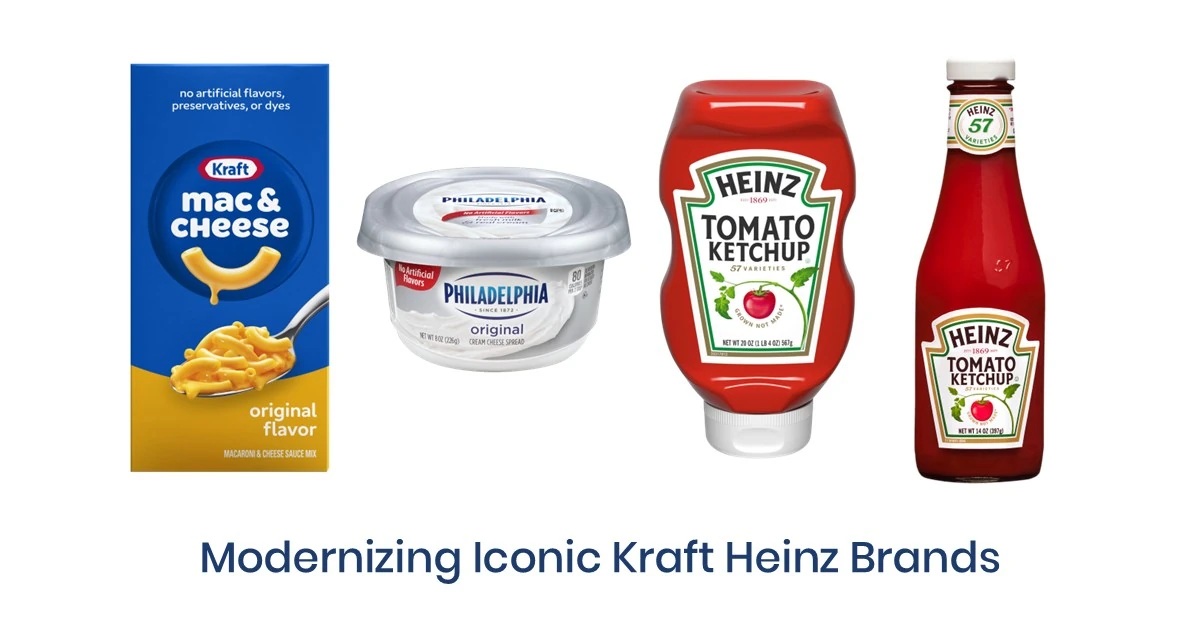
As consumer preferences evolved, the company began focusing on revitalizing brands to ensure that its legacy products remained relevant in an increasingly health-conscious market. By combining its heritage with innovation, Kraft Heinz has sought to maintain its leadership position while adapting to changing dietary trends.
Key Business Segments
| Segment | Major Products |
|---|---|
| Condiments and Sauces | Heinz Ketchup, mayonnaise, sauces |
| Cheese and Dairy | Kraft Cheese, Philadelphia Cream Cheese |
| Meals and Snacks | Kraft Mac & Cheese, Lunchables, Velveeta |
| Meat Products | Oscar Mayer hot dogs and cold cuts |
| Beverages and Desserts | Capri Sun, Kool-Aid, Jell-O |
| International Operations | Local and regional food brands across global markets |
The company’s extensive portfolio and strong brand recognition have provided a solid foundation for long-term growth. However, the rise of healthier food products and increasing competition from emerging brands have made legacy brand transformation a strategic priority for Kraft Heinz.
Market Trends Driving Brand Transformation
The global food industry has experienced a significant shift as consumers increasingly prioritize nutrition, transparency, and sustainability in their purchasing decisions. Traditional packaged food companies have faced mounting pressure to adapt as changing lifestyles and rising health awareness reshape consumption patterns. For Kraft Heinz, these evolving preferences highlighted the importance of revitalizing brands to remain competitive and relevant in a rapidly changing marketplace.
Rather than relying solely on the strength of its legacy products, the company recognized the need to embrace healthy and organic options and align its portfolio with emerging consumer expectations. Several industry trends played a major role in accelerating this transformation.
The Rise of Health-Conscious Consumers
Today’s consumers are paying closer attention to what goes into their food. They are increasingly seeking products with simpler ingredients, lower sugar content, and fewer artificial additives.
Key factors influencing purchasing decisions include:
- Preference for healthier food products.
- Demand for clean label products.
- Greater awareness of nutrition and wellness.
- Interest in natural ingredients in packaged foods.
- Rising popularity of organic and plant-based alternatives.
Growing Organic Food Market Trends
The organic food segment has expanded steadily over the past decade, driven by consumers who value quality, sustainability, and transparency. This growth has encouraged established companies to invest in organic product innovation and diversify their offerings.
Some major trends shaping the industry include:
| Trend | Impact on Food Companies |
|---|---|
| Clean-label movement | Reformulation of existing products |
| Organic food demand | Expansion of premium product lines |
| Plant-based eating | Increased investment in alternative products |
| Sustainability concerns | Responsible sourcing and packaging initiatives |
| Digital influence | Faster spread of health and wellness trends |
The Challenge: Why Revitalizing Brands Became Necessary
Despite owning some of the world’s most recognizable food brands, Kraft Heinz faced increasing pressure as consumers shifted toward healthier and more transparent food choices. Rising health awareness and changing dietary preferences reduced the appeal of traditional processed foods, making revitalizing brands essential for maintaining long-term relevance.
At the same time, emerging health-focused companies intensified competition, prompting Kraft Heinz to embrace healthy and organic options and modernize its product portfolio.
Changing Consumer Expectations
Consumers increasingly demanded:
- Healthier food products.
- Clean label products.
- Natural ingredients in packaged foods.
- Greater transparency and sustainability.
Key Challenges Facing Kraft Heinz
| Challenge | Impact |
|---|---|
| Changing dietary habits | Reduced demand for some traditional products |
| Health concerns | Need for product reformulation |
| Competitive pressure | Growing rivalry from emerging brands |
| Premiumization trend | Demand for higher-quality ingredients |
Balancing Heritage with Innovation
One of Kraft Heinz’s biggest challenges was modernizing its iconic brands without losing the trust and familiarity built over generations. This need to balance tradition with evolving consumer preferences became a key driver behind the company’s broader legacy brand transformation.
Kraft Heinz’s Brand Revitalization Strategy
To remain competitive in a changing marketplace, Kraft Heinz adopted a long-term approach centered on revitalizing brands and meeting the growing demand for healthy and organic options. Rather than overhauling its legacy portfolio, the company focused on modernizing products while preserving the familiarity that consumers value.
Key Pillars of the Transformation Strategy
Kraft Heinz’s brand revitalization strategy revolved around several priorities:
- Investing in packaged food innovation.
- Reformulating products with cleaner ingredients.
- Expanding into organic and premium categories.
- Enhancing sustainability and transparency.
- Appealing to younger and health-conscious consumers.
Investing in Product Innovation
Innovation became a major driver of growth as Kraft Heinz sought to adapt its products to changing dietary preferences. The company increased its focus on research and development to create offerings that balanced taste, convenience, and nutrition.
Areas of Innovation
- Reduced sugar and sodium formulations.
- Organic product innovation.
- Plant-based and healthier alternatives.
- Premium product extensions.
These efforts helped the company strengthen its position in a market increasingly influenced by consumer health trends in the food industry.
Portfolio Expansion Through Acquisitions and Partnerships
In addition to internal innovation, Kraft Heinz explored acquisitions and collaborations to expand its presence in emerging categories. This approach enabled the company to respond more quickly to evolving market trends and diversify beyond traditional product segments.
| Strategic Focus | Objective |
|---|---|
| Product reformulation | Meet changing nutritional preferences |
| Premium offerings | Capture higher-value market segments |
| Organic products | Address rising organic food market trends |
| Sustainability initiatives | Enhance brand reputation |
| Partnerships and acquisitions | Accelerate category expansion |
Balancing Tradition with Modern Preferences
One of the defining features of Kraft Heinz’s strategy was its emphasis on preserving brand heritage. Rather than abandoning its iconic products, the company focused on food brand repositioning by making incremental improvements that reflected evolving consumer needs.
This balanced approach enabled Kraft Heinz to pursue legacy brand transformation while maintaining the trust and emotional connection that generations of consumers have associated with brands like Heinz, Kraft, and Philadelphia. It also laid the groundwork for the company’s broader push toward healthier and more sustainable offerings.
Embracing Healthy and Organic Options
As consumer preferences shifted toward wellness and transparency, Kraft Heinz increased its focus on healthy and organic options to support its efforts in revitalizing brands. Rather than creating entirely new brands, the company chose to modernize existing products through reformulation and portfolio expansion.
Reformulating Products for Modern Consumers
Kraft Heinz improved several flagship products to meet the growing demand for healthier food products and clean label products.
Key Initiatives
- Removal of artificial preservatives, flavors, and colors.
- Reduced sugar and sodium content in selected products.
- Greater use of natural ingredients in packaged foods.
- Improved ingredient transparency and labeling.
Expanding Organic and Premium Offerings
To capitalize on organic food market trends, the company broadened its portfolio with:
- Organic ketchup and condiments.
- Premium organic food products.
- Plant-based innovations.
- Healthier snacks and meal solutions.
Consumer Trends and Company Response
| Consumer Trend | Kraft Heinz Response |
|---|---|
| Demand for clean ingredients | Product reformulation |
| Preference for organic foods | Expansion of organic offerings |
| Interest in wellness | Health-focused product development |
| Need for transparency | Clearer labels and ingredient disclosure |
By embracing healthy and organic options, Kraft Heinz strengthened the relevance of its iconic brands and laid the foundation for continued growth in an increasingly health-conscious marketplace.
Packaged Food Innovation Across Key Brands
Innovation played a central role in Kraft Heinz’s efforts toward revitalizing brands and maintaining their relevance in a changing marketplace. Rather than replacing its iconic products, the company focused on modernizing them through cleaner ingredients, new product variants, and premium offerings. This approach allowed Kraft Heinz to respond to evolving consumer preferences while preserving the familiarity that customers had trusted for decades.
By combining consumer insights with research and development, the company accelerated packaged food innovation across several of its flagship brands. These initiatives helped Kraft Heinz strengthen its position among health-conscious consumers and support its broader strategy around healthy and organic options.
Modernizing Iconic Products
Kraft Heinz introduced improvements across multiple categories to better align with changing tastes and dietary trends.
Areas of Focus
- Cleaner ingredient formulations.
- Organic product innovation.
- Premium product extensions.
- Healthier snack and meal options.
- Improved packaging and transparency.
- Expansion into plant-based categories.
How Major Brands Evolved
Heinz
Heinz leveraged its strong brand equity to introduce products that appealed to consumers seeking simpler ingredients and premium choices.
Key initiatives included:
- Organic Heinz Ketchup made with USDA-certified organic tomatoes.
- Reduced-sugar and no-added-sugar ketchup varieties.
- Expansion into specialty sauces and premium condiments.
- Greater focus on ingredient transparency.
Kraft Mac & Cheese
One of the company’s most iconic brands underwent significant reformulation to address changing consumer expectations.
Notable changes included:
- Removal of artificial preservatives, flavors, and dyes.
- Introduction of whole grain and healthier variants.
- Expansion into convenient meal solutions.
- Enhanced nutritional profiles while maintaining taste.
Philadelphia Cream Cheese
Philadelphia expanded beyond its traditional offerings by introducing products aimed at consumers seeking premium and healthier choices.
Major developments included:
- Product diversification into spreads and dips.
- Introduction of reduced-fat alternatives.
- Premium positioning in select categories.
- Focus on quality ingredients and convenience.
Innovation Strategy Across Brands
| Brand | Innovation Focus | Consumer Benefit |
|---|---|---|
| Heinz | Organic and reduced-sugar products | Healthier condiment choices |
| Kraft Mac & Cheese | Cleaner ingredients and healthier variants | Improved nutritional appeal |
| Philadelphia | Premium and lower-fat options | More diverse product selection |
| Lunchables | Better ingredients and updated offerings | Increased appeal to families |
| Capri Sun | Reduced sugar and ingredient improvements | Health-conscious beverage choices |
Building Long-Term Brand Relevance
These innovations reflected more than simple product upgrades. They represented a broader legacy brand transformation designed to help Kraft Heinz compete in an industry increasingly influenced by wellness trends and sustainability concerns.
By investing in packaged food innovation and continuously adapting its products, Kraft Heinz demonstrated that even century-old brands can evolve with consumer expectations. This ability to modernize without abandoning brand heritage became a key factor in the company’s ongoing journey toward revitalizing brands for the next generation of consumers.
Marketing and Food Brand Repositioning
Product innovation alone was not enough to ensure long-term success. Kraft Heinz also focused on food brand repositioning to strengthen connections with younger consumers and reinforce the relevance of its legacy brands. As part of its strategy for revitalizing brands, the company modernized its marketing approach, emphasizing transparency, quality, and evolving consumer lifestyles.
By aligning brand messaging with wellness and sustainability trends, Kraft Heinz sought to maintain the trust of existing customers while attracting new generations looking for healthy and organic options.
Refreshing Brand Messaging
Kraft Heinz shifted its communication strategy to highlight product quality, ingredient transparency, and convenience. Instead of relying solely on nostalgia, the company emphasized values that resonated with modern consumers.
Key Marketing Priorities
- Promoting healthier food products.
- Highlighting clean label products and ingredient quality.
- Building trust through transparency.
- Showcasing sustainability initiatives.
- Strengthening emotional connections with consumers.
Leveraging Digital and Social Media
The rise of digital platforms changed the way consumers interact with brands. Kraft Heinz increased its investment in online marketing and consumer engagement to remain relevant in an increasingly connected world.
Some of the company’s approaches included:
- Social media campaigns targeting younger audiences.
- Influencer collaborations and partnerships.
- Interactive digital experiences.
- Personalized marketing based on consumer insights.
- Storytelling focused on quality and innovation.
Packaging and Label Improvements
Packaging became an important tool for communicating product benefits and reinforcing brand credibility. Consumers increasingly wanted clear information about ingredients and nutritional value.
Areas of Improvement
- Simplified ingredient labels.
- More transparent nutritional information.
- Sustainable packaging initiatives.
- Updated designs to appeal to modern consumers.
- Enhanced visibility of organic and premium products.
Repositioning Brands for the Future
| Strategy | Objective |
|---|---|
| Digital marketing | Increase engagement with younger consumers |
| Transparent labeling | Build consumer trust |
| Sustainability messaging | Strengthen brand reputation |
| Premium positioning | Capture higher-value segments |
| Health-focused communication | Align with changing dietary preferences |
Creating Stronger Consumer Connections
Through a combination of modern marketing and thoughtful brand repositioning, Kraft Heinz was able to reinforce the relevance of its iconic products in a highly competitive market. These efforts complemented the company’s innovation initiatives and played a crucial role in its broader legacy brand transformation.
By adapting how its brands were presented and communicated, Kraft Heinz demonstrated that successful revitalizing brands involves not only changing products but also reshaping the way consumers perceive and experience them.
Sustainability and Corporate Responsibility
As part of its strategy for revitalizing brands, Kraft Heinz has increasingly emphasized sustainability and responsible business practices. Growing consumer awareness around environmental issues has made sustainability an important factor in building trust and supporting demand for healthy and organic options.
Key Sustainability Priorities
- Reducing greenhouse gas emissions.
- Increasing the use of recyclable packaging.
- Promoting responsible sourcing of ingredients.
- Minimizing food waste across operations.
- Improving water conservation practices.
Sustainability and Health Progress
Kraft Heinz’s sustainability and health progress shows how responsible sourcing and nutrition targets support its broader strategy of revitalizing brands. In 2024, the company reported 86% recyclable, reusable or compostable packaging, 83% sustainably sourced Heinz ketchup tomatoes, and 75.33% compliance with Global Nutrition Targets. These metrics show how Kraft Heinz is connecting brand modernization with sustainability, cleaner ingredients, and healthier product expectations.
Sustainability Focus Areas
| Area | Focus |
|---|---|
| Packaging | Increased recyclability and waste reduction |
| Climate | Lower greenhouse gas emissions |
| Agriculture | Responsible ingredient sourcing |
| Operations | Greater efficiency and reduced waste |
Supporting Long-Term Brand Value
Consumers increasingly favor companies that prioritize sustainability and transparency. By integrating responsible practices into its operations, Kraft Heinz has strengthened its legacy brand transformation efforts and reinforced the long-term relevance of its iconic brands. Sustainability has become an important pillar in the company’s broader journey toward revitalizing brands for future generations.
Results and Business Impact
Kraft Heinz’s focus on innovation, product reformulation, and healthy and organic options has helped the company strengthen the relevance of its legacy portfolio. While the transformation has been gradual, these initiatives have enabled Kraft Heinz to better align with changing consumer preferences and support its broader efforts toward revitalizing brands.
By modernizing iconic products and investing in packaged food innovation, the company has improved its competitive position and created new growth opportunities across several categories.
Kraft Heinz Net Sales Trend
Kraft Heinz’s sales trends illustrate the ongoing challenges of managing legacy brands in a dynamic marketplace. While reported net sales rose from $24.98 billion in 2019 to $26.64 billion in 2023, both net sales and organic net sales moderated in 2024 and 2025 as consumer spending patterns and competitive pressures evolved. Nevertheless, the company’s continued investment in innovation, cleaner ingredients, and healthy and organic options reflects its broader strategy of revitalizing brands and maintaining relevance in an increasingly health-conscious food industry.
Key Outcomes of the Transformation
- Expanded portfolio of healthier food products.
- Improved consumer perception and brand relevance.
- Increased focus on premium and organic categories.
- Enhanced trust through cleaner ingredients and transparency.
- Stronger alignment with health-conscious consumers.
- Continued innovation across flagship brands.
Business Impact at a Glance
| Area | Impact |
|---|---|
| Product Innovation | Broader and more diversified portfolio |
| Brand Perception | Improved consumer trust and relevance |
| Health-Focused Offerings | Expanded appeal among wellness-oriented consumers |
| Premium Categories | New growth opportunities |
| Sustainability Efforts | Stronger brand reputation |
Strengthening Long-Term Competitiveness
Although consumer preferences will continue to evolve, Kraft Heinz’s transformation demonstrates how established companies can adapt without abandoning their heritage. By balancing innovation with brand familiarity, the company has positioned itself for sustainable growth and provided one of the notable examples of successful brand revitalization in the food industry.
Competitive Landscape
Kraft Heinz operates in a highly competitive food industry where major global players are also investing in healthier products, sustainability, and innovation. As consumer preferences continue to evolve, companies are increasingly focusing on wellness and transparency to maintain market relevance. This competitive environment has further reinforced the importance of revitalizing brands and expanding healthy and organic options.
Kraft Heinz vs. Major Competitors
Nestlé: Nestlé has aggressively expanded its nutrition, health, and wellness portfolio through product innovation and acquisitions. The company has also strengthened its presence in plant-based and premium categories.
General Mills: General Mills has focused heavily on organic food market trends, particularly through brands such as Annie’s. Its strategy emphasizes natural ingredients, sustainability, and premium offerings.
Unilever: Unilever has prioritized sustainable food brands and responsible sourcing while expanding healthier product choices across several categories.
Competitive Comparison
| Company | Health-Focused Strategy | Organic Presence | Sustainability Focus |
|---|---|---|---|
| Kraft Heinz | Product reformulation and packaged food innovation | High | Strong |
| Nestlé | Nutrition and wellness initiatives | High | Strong |
| General Mills | Organic and natural product expansion | Very High | Strong |
| Unilever | Sustainable and health-conscious offerings | Moderate | Strong |
Key Competitive Advantages of Kraft Heinz
- Strong portfolio of globally recognized brands.
- Extensive distribution network.
- Continued investment in product innovation.
- Ability to modernize legacy products without losing brand identity.
- Growing focus on cleaner ingredients and premium categories.
Despite intense competition, Kraft Heinz’s ability to combine heritage with innovation has enabled the company to maintain relevance and strengthen its position in the evolving packaged food market.
Conclusion and Key Lessons
Kraft Heinz’s journey highlights how revitalizing brands can help legacy companies remain relevant in a rapidly changing marketplace. By embracing healthy and organic options, investing in product innovation, and focusing on transparency and sustainability, the company successfully modernized its iconic portfolio while preserving the trust and familiarity that consumers value.
Key Lessons from Kraft Heinz’s Transformation
- Listen and adapt to changing consumer preferences.
- Balance brand heritage with innovation.
- Invest in healthier food products and packaged food innovation.
- Build trust through clean ingredients and transparency.
- Prioritize sustainability to strengthen long-term brand value.
Ultimately, Kraft Heinz’s experience demonstrates that successful brand revitalization is not about abandoning the past, but about evolving with consumer expectations to create sustainable growth and lasting relevance.