
Introduction to Augmented Reality in Education
Education is evolving at an unprecedented pace, driven by rapid advances in technology. Among the most transformative innovations is Augmented Reality (AR), a technology that blends the digital and physical worlds, creating immersive learning experiences that enhance understanding and engagement. Once confined to gaming and entertainment, AR is now reshaping classrooms, lecture halls, and training environments worldwide.
What is Augmented Reality in Education?
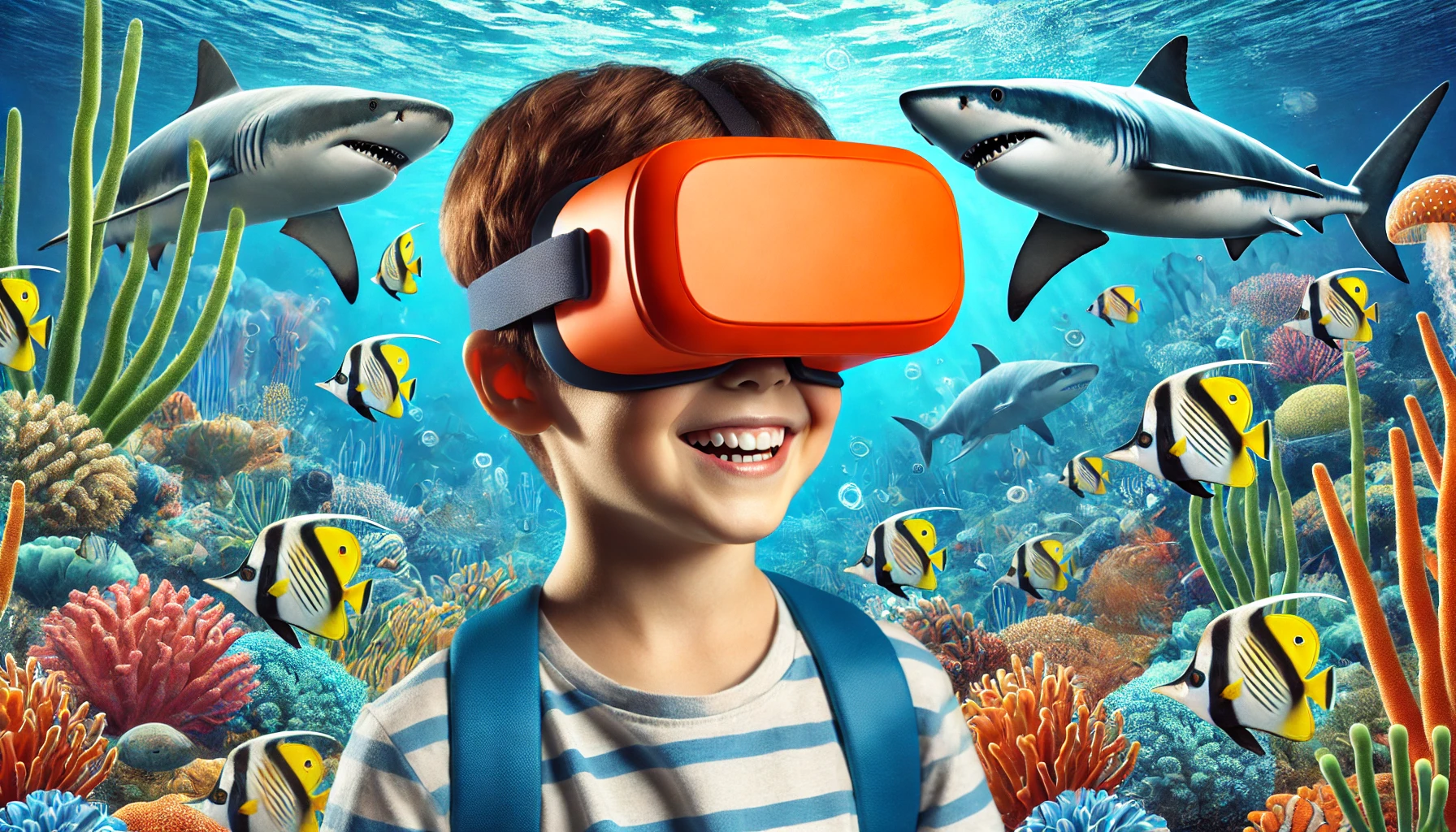
Augmented Reality in education overlays interactive digital elements such as 3D models, videos, or simulations onto the real world using smartphones, tablets, or AR headsets. This allows students to experience abstract concepts in tangible ways, making learning more visual, interactive, and memorable. Unlike Virtual Reality (VR), which replaces the physical world with a simulated environment, AR enriches the real-world classroom experience rather than replacing it.
Why AR is a Game-Changer for Schools
| Key Benefit | Description |
|---|---|
| Bridging theory & practice | Transforms static lessons into hands-on, experiential learning (e.g., 3D heart anatomy models) |
| Boosting engagement | Interactive AR content captures attention and makes complex topics approachable |
| Personalized learning | AR tools adapt to different learning speeds and styles |
| Collaborative learning | Multi-user AR environments encourage teamwork and problem-solving |
The Growing Relevance of AR in Modern Education
Global investment in AR for education is rising rapidly. Market research says, the AR education market is projected to grow approximately 8 billion by 2028, driven by increasing demand for interactive and remote learning solutions. This surge reflects a broader shift towards technology-driven classrooms, where AR is becoming a key component of the digital learning ecosystem.
Setting the Stage for Transformation
As educational institutions face challenges in engagement, accessibility, and retention, AR offers a powerful solution. From immersive STEM experiments to virtual historical tours, AR not only supports traditional learning but also introduces new ways to teach, assess, and inspire students.
In the following sections, we will explore the technologies driving AR in education, current adoption trends, real-world applications, market growth, and how schools can overcome the barriers to implementing this powerful tool.
Key Technologies and Trends in Augmented Reality in Education
Augmented Reality (AR) is rapidly changing the education landscape, enabling teachers to create immersive and interactive learning experiences. This transformation is powered by advancements in AR hardware, software platforms, and emerging trends that are making AR more accessible and impactful.
AR Hardware and Software in Education
| Category | Examples | Description | Key Use Cases |
|---|---|---|---|
| Hardware | Smartphones, Tablets, AR Glasses (HoloLens), Interactive Whiteboards | Devices that display AR content through cameras, sensors, or headsets | K-12 learning, medical training, vocational education |
| Software Platforms | Google Expeditions, Merge EDU, JigSpace, Unity (ARKit/ARCore) | Apps and tools to deliver or develop AR lessons | Virtual field trips, STEM visualization, language learning |
Emerging Trends in AR for Education
- AI-driven personalization: Adaptive AR lessons customized for individual learners.
- 5G and AR Cloud integration: Enabling real-time, multi-user AR experiences.
- Gamification: Making AR-based lessons interactive and engaging through rewards and challenges.
- Metaverse integration: Creating virtual campuses and collaborative learning spaces.
- Affordable AR hardware: Increasing adoption in schools through cost-effective devices.
As hardware becomes more affordable and software platforms more user-friendly, AR is poised to become a mainstream educational technology. Schools that invest early in AR tools will not only engage students but also prepare them for a future where immersive learning is the norm.
Current Adoption of Augmented Reality in Education
Augmented Reality (AR) is steadily moving from experimental technology to a practical tool for education. While some regions and institutions are adopting it faster than others, the overall trend shows a growing interest in using AR to enhance teaching and learning experiences.
Adoption Trends in Education
- K–12 Schools: Many schools are using AR for subjects like science, history, and language learning to make lessons more interactive and engaging.
- Higher Education: Universities and colleges are adopting AR for complex topics such as medical simulations, engineering, and design-based courses.
- Vocational Training: AR is being integrated into skill-based training, especially in healthcare, manufacturing, and technical education.
- Corporate and Adult Learning: Businesses are exploring AR for employee training and professional development programs.
Regional Adoption Overview
The updated market share of Augmented Reality (AR) in Education highlights a more balanced global distribution:
- North America: Continues to lead due to strong infrastructure, significant investments in AR hardware and software, and teacher training programs. Platforms like Merge Cube and Google Expeditions are widely adopted.
- Europe: Demonstrates steady growth with government-backed digital education policies and a strong focus on STEM education.
- Asia-Pacific: Experiences rapid adoption driven by EdTech innovation, increasing smartphone penetration, and government support for digital learning.
- Latin America: Adoption is growing through pilot programs that aim to overcome infrastructure gaps and bring AR to remote education.
- Middle East & Africa: Emerging opportunities exist as governments invest in smart classrooms and new AR-based educational initiatives.
This updated data shows that while North America still holds the largest share, Europe and Asia-Pacific are rapidly closing the gap, signaling a global shift towards immersive learning solutions.
Key Factors Influencing Adoption
- Infrastructure readiness: Schools with strong digital infrastructure are leading adoption.
- Cost considerations: High hardware costs remain a challenge for many institutions.
- Teacher training: Successful AR integration depends on educators being trained to use the technology effectively.
- Content availability: Adoption improves as more subject-specific AR content becomes available.
Applications of Augmented Reality in Education
In this section, we explore how AR is being used across different educational contexts from classroom learning to professional training, highlighting a few data-supported outcomes and use cases.
AR in Different Educational Settings
- K–12 Classrooms: AR tools are widely used in science, math, language arts, and social studies to bring static content to life. Innovations include interactive 3D models in biology, AR-enhanced word label overlays for language learning, and virtual field trips.
- Higher Education & Medical Training: AR is especially impactful for anatomy and health sciences, students can visualize internal body structures in 3D using tablet-based or screen-based AR tools, which participants report improved learning experiences over traditional textbooks.
- Vocational and Technical Training: AR simulations enable hands-on practice in technical disciplines such as engineering, manufacturing, and healthcare, often replacing risky or costly physical setups.
- Special & Inclusive Education: AR games and visually immersive lessons support students with learning differences. Studies show AR game apps improve engagement and cognitive outcomes in accessible learning contexts.
Evidence-Based Benefits: Key Facts
- A large meta‑analysis found a medium learning effect size for AR interventions in education.
- In language acquisition, AR-assisted learning showed a 7% improvement in same-day recall and a 21% gain after four days compared to flashcards.
- Medical training AR tools were deemed effective in 93% of evaluated studies, both as primary and supplementary learning aids.
Real-World Use Cases by Discipline
| Subject / Context | Example Use Case | Impact or Outcome |
|---|---|---|
| Biology / Anatomy | AR overlays of 3D human anatomy on tablets or screens | Enhanced spatial understanding and student engagement |
| Language Learning | AR dynamic object labeling (ARbis Pictus) for vocabulary acquisition | 7 % better same-day recall; 21 % better after 4 days |
| STEM & Field Trips | AR sandboxes, augmented chemical or physics simulations on mobile devices | Visual, experiential learning even outside labs |
| Medical / Clinical Training | Simulated surgical or diagnostic scenarios via AR headsets | Effective in 93% of cases reviewed, reducing reliance on physical role-pla |
| Accessible / Special Education | Game-based AR tasks designed for special needs learners | Improved motivation, retention, and social interaction |
Highlighted Tools & Platforms
- quiver: Bridges coloring books and interactive AR for young learners. Children color paper pages and then scan them to see animated characters come to life, boosting engagement and reading motivation.
- zSpace AR/VR Laptop: Utilized across more than 1,500 schools and institutions, serving over one million students as of 2019. It has been widely recognized for education innovation and interactive STEM learning.
AR is delivering clear value across subjects, from biology and language learning to vocational training and special education. As quantitative and qualitative studies show, AR can significantly improve understanding, memory retention, and learner motivation. It makes abstract or complex subjects tangible, interactive, and globally accessible, even beyond traditional classroom walls.
Benefits of Augmented Reality in Education
Augmented Reality (AR) brings a wide range of advantages to educational environments, from boosting engagement to enabling personalized instruction. Drawing from recent studies and practical applications, this section outlines the top benefits supported by evidence.
Benefits at a Glance
| Benefit | Description |
|---|---|
| Engagement & Motivation | Interactive, game-like AR learning boosts interest and reduces passivity |
| Visualization & Clarity | 3D overlays and simulations simplify abstract or complex concepts |
| Personalized Learning | Custom feedback and adaptive paths for individual learner needs |
| Improved Retention | Stronger recall through immersive, visual, and interactive content |
| Experiential Learning | Virtual field trips and scenario-based learning that contextualize curriculum content |
Enhancing Engagement & Motivation
- AR transforms passive lessons into interactive learning experiences, introducing 3D visuals, gamified elements, and real-world overlays that draw student interest.
- A 2022 McGraw‑Hill study found that 86% of educators cited improved student engagement as the greatest benefit of AR; 75% noted it helps address diverse learning styles, and 72% highlighted increased motivation.
- Research shows AR’s immersive features also foster collaborative learning dynamics and active participation.
Better Understanding of Complex Concepts
- AR enables students to visualize topics difficult to grasp through text or diagrams alone, think molecular structures, anatomical layers, physics simulations, and historical environments.
- Additional studies highlight that AR aids in reducing cognitive overload by offering immersive yet intuitive representations of abstract information.
Personalized and Adaptive Learning
- AR combined with adaptive technologies (e.g. cloud-based systems) can tailor content and feedback to individual learners, accommodating pace, abilities, and learning styles.
- Such personalization tools are especially helpful for inclusive education, enabling adjustments for learners with diverse needs or learning differences.
Improved Retention & Long-Term Recall
- In language learning, the ARbis Pictus study showed learners scored 7% higher on recall tests the same day, and 21% higher after four days than learners using flashcards.
- The visual and interactive nature of AR helps reinforce memory pathways, resulting in better retention over time.
Experiential & Immersive Learning Opportunities
- AR enables virtual field trips and situational learning experiences, such as touring historical sites, exploring space, or dissecting biological systems, without leaving the classroom.
- Immersive multisensory engagement, visual, audio, and sometimes tactile feedback, helps deepen understanding and provides context to abstract concepts.
Market Trends and Growth of AR in Education
Augmented Reality (AR) is witnessing steady growth in education, driven by EdTech investments, improved hardware, and increasing demand for immersive learning tools. Its expansion spans across K–12 schools, higher education, and corporate training programs.
Current Market Landscape
The AR/VR education market in 2024 was valued in the around tens of billions of dollars and is expected to more than triple in next 8-10 years with compound annual growth rate (CAGR) of 15–25%, depending on the region and market segment.
The broader global AR market (beyond education) is expected to grow from tens of billions to several hundred billion dollars by 2030, showing AR’s massive potential across industries. These ranges reflect the strong upward trajectory of AR adoption in education as part of the wider AR ecosystem.
Growth Drivers in Education AR
- Expansion of EdTech ecosystems: Schools and universities are integrating AR to enhance digital learning experiences.
- Lower-cost devices and cloud platforms: Affordable AR headsets and cloud-based deployment reduce adoption barriers.
- Government-backed digital initiatives: Education modernization programs, especially in Asia-Pacific and North America, support AR integration.
Hybrid and remote learning needs: AR creates engaging virtual classrooms, interactive labs, and immersive field trips.
Regional Momentum
- North America: Leads adoption due to strong infrastructure and early EdTech investment.
- Asia-Pacific: Expected to see the fastest growth, supported by government-led smart classroom programs.
- Europe: Growing steadily with strong emphasis on digital education and immersive learning initiatives.
Segment Trends
- Academic institutions (K–12 and higher education): Hold the largest share of AR adoption in education.
- Corporate training: One of the fastest-growing segments, with strong demand for skill-based immersive learning.
- Cloud deployment: Increasingly favored due to scalability and cost-effectiveness.
Key Industry Players in Augmented Reality for Education
zSpace, Inc. (Public, NASDAQ: ZSPC)
Headquartered in San Jose, California and founded in 2007, zSpace is known for headset‑free AR/VR laptops designed for immersive STEM and CTE (Career & Technical Education) learning. Their stylus‑based 3D displays allow deep interaction with virtual models in biology, engineering, and coding environments.
Following a public listing in late 2024, zSpace has expanded its content offerings through acquisitions, most recently Blockscad (March 2025) and Second Avenue Learning (April 2025), to enhance curriculum-aligned interactive content. Recognized at ISTELive25 for its Imagine laptop and supported by AI‑powered tools like Career Explorer, zSpace maintains a solid competitive position as a full-stack provider in K‑12 and vocational education markets.
EON Reality / EON‑XR (Private, founded 1999)
EON Reality, based in Irvine, California, provides an AI-powered, device-agnostic XR platform EON‑XR and a vast library of over 830,000 assets and lessons. The company supports global clients, including universities, governments, and enterprises, with solutions that bridge AR, VR, spatial AI, and IoT.
Operating in more than 90 countries, EON Reality has emphasized global expansion in lieu of a planned SPAC merger and continues to enhance its tools in Spatial AI and XR learning with no-code course builders. It competes on scale, content variety, and flexibility across hardware types.
Merge EDU (Merge Labs) (Private, founded 2014)
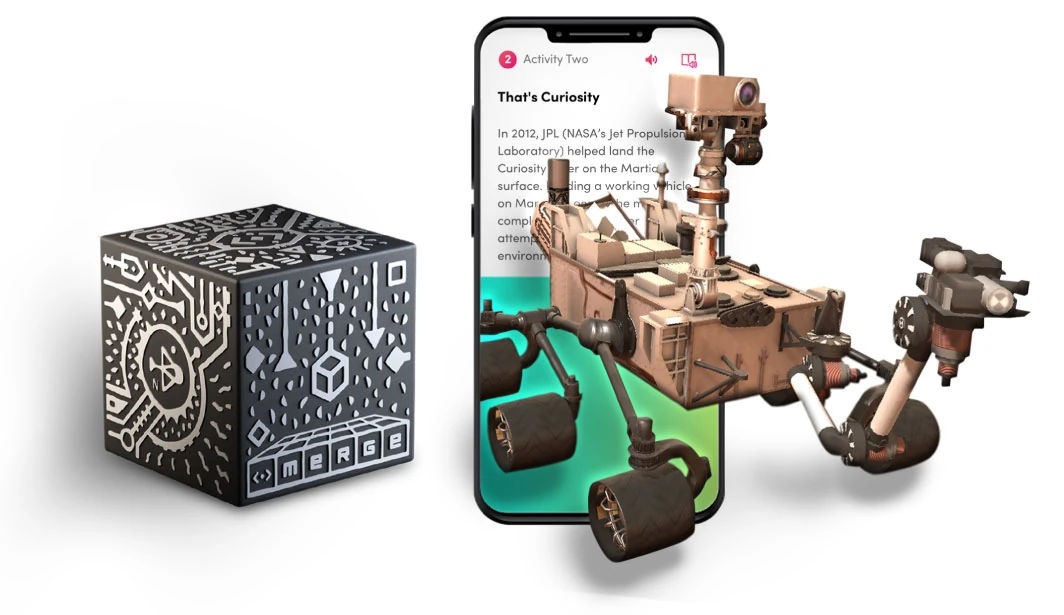
Based in San Antonio, Merge offers low-cost experiential AR learning through its signature Merge Cube and Merge EDU app. Geared toward K–12 science and STEM learning, students can hold and manipulate interactive 3D objects in classroom activities.
With approximately US $11.5 million in total funding, Merge’s differentiator is its affordability, accessibility, and ease of use, especially appealing where full-device solutions like zSpace are too costly. It competes with PlayShifu and Osmo in the early learners and toy‑based AR segment.
PlayShifu (Private, founded ~2016)
An India‑based educational technology company, PlayShifu develops interactive STEM kits that merge physical toys with AR-based mobile app experiences. Their product line includes globes, puzzles, and modular games aimed at early childhood and primary school learners. Ranked among the top global AR/VR education companies, PlayShifu sets itself apart through engaging physical‑digital hybrid play-based learning.
Osmo (Tangible Play) (Acquired by BYJU’s)
Founded in 2014 and headquartered in Palo Alto, Osmo combines iPad/iPhone-based AR with tangible physical pieces (e.g. letters, game tiles) to foster early education in literacy, math, and problem-solving.
Recognized by TIME and Fast Company for innovation, Osmo was acquired by Byju’s in 2019 for approximately USD 120 million. Despite financial challenges at parent company BYJU’s, its educational AR apps remain widely used in homes and classrooms.
Practically (Private, founded 2018, India)
Practically is an immersive education platform that combines AR, animation, and gamification to support self‑learning for middle and high school students (grades 6–12).
With approximately US $24 million raised, its virtual labs, concept-driven simulations, and gamified lessons seek to boost conceptual clarity in STEM. Competes with Merge EDU for K–12 experiential learning in regions like India and Southeast Asia.
Strivr (Private, US‑based)
Strivr provides immersive VR/AR training platforms primarily geared toward corporate learning, safety protocols, and workforce development; it also serves educational training providers.
Known for high‑impact simulations, Strivr continues to grow as enterprises and vocational institutions adopt immersive training regimes. Although it isn’t exclusively education-focused, it features among leading players bridging corporate training and academic skill labs.
Virti (Private, UK‑based, founded 2018)
Virti offers an immersive learning platform leveraging XR and AI, widely used in healthcare training, soft‑skills development, and experiential learning. Organizations such as the NHS and NIH deploy Virti’s virtual patients and performance-feedback tools, which blend AR/VR with analytics.
Named among TIME’s Best Inventions (2020) and Fast Company’s Most Innovative Companies (2021), Virti extends AR learning into real-world simulation scenarios beyond classrooms.
Magic Leap (Private, founded 2011, Florida)
Magic Leap develops advanced spatial computing hardware and AR headsets for enterprise and education applications. While not strictly focused on K–12, its proprietary display technology introduces immersive learning opportunities especially for design, anatomy, and spatial reasoning.Though still maturing and pursuing mixed-use cases, Magic Leap remains a notable player in AR hardware innovation for education.
These companies illustrate the diversity within the educational AR ecosystem, from hardware integrations (zSpace, Magic Leap), software & content ecosystems (EON Reality, Merge), to gamified kits (PlayShifu, Osmo). Their reach spans global K–12, higher education, and workforce training, often converging on goal-aligned tech innovation. Let me know if you want a tabular comparison or deeper insight into any particular firm!
Leading AR Tools and Platforms in Education
This section showcases the most influential AR platforms shaping education today, drawing on educator feedback and real classroom use. It includes a practical table of top tools and summaries of their unique strengths.
Top AR Tools & Platforms for Education
| Platform / Tool | Format | Core Educational Strength | Best Use Cases |
|---|---|---|---|
| Merge EDU / Cube | Mobile + physical cube | Hands‑on 3D exploration for STEM learners | Chemistry, biology, physics education |
| JigSpace | AR presentation tool | Visual step-by-step lessons with “Jigs” | Engineering, anatomy, complex systems |
| zSpace | AR/VR laptop (no headset) | Immersive STEM simulations via stylus | Visual labs, vocational & technical ed |
| Axon Park | Cross-platform AR/VR | AI-personalized 3D learning across subjects | Higher ed, institutions using multiple disciplines |
| EON-XR (EON Reality) | AR/VR content ecosystem | Extensive asset library & content creation capabilities | School districts; teacher-created modules |
| Unity / ARKit / ARCore | Development SDKs | Flexible platform to build custom AR apps | University-level or bespoke projects |
Additional Tools and Emerging Platforms
EasyAR, Adobe Aero, Vuforia, 8th Wall, Apple RealityKit: Widely used AR SDKs that support web-based and mobile AR projects in educational settings.
Specialized platforms like Virti are integrating XR with AI to create immersive simulations, such as virtual patients or practical training environments, for healthcare and vocational learning.
Feedback from Educators
Surveys show that about two‑thirds of educators believe AR tools help gamify lessons, boosting student interest and participation. Around 70% of students report that AR makes learning more enjoyable and intuitive.
Challenges in Adopting AR in Education
While Augmented Reality (AR) is transforming education, its integration is not without hurdles. Institutions face financial, technical, and pedagogical barriers that can delay or limit adoption. Understanding these challenges is essential for schools and universities to plan successful implementation strategies.
Key Challenges in AR Adoption
| Challenge | Description | Impact on Adoption |
|---|---|---|
| High Costs | Devices, software, training expenses | Delays widespread rollout |
| Technical Barriers | Infrastructure and compatibility issues | Limits classroom usage |
| Teacher Training | Lack of AR expertise among educators | Slows curriculum integration |
| Content Limitations | Insufficient subject-specific resources | Reduces educational value |
| Student Accessibility | Unequal access to AR-enabled devices | Raises equity concerns |
| Data Privacy | Security and compliance risks | Increases administrative burden |
| Resistance to Change | Hesitation from staff and leadership | Slows strategic adoption |
High Implementation Costs
- AR hardware (headsets, AR-enabled devices) and software licensing can be costly for schools, especially in developing regions.
- Maintenance, updates, and teacher training further add to the financial burden.
Technical Barriers
- Limited access to high-performance devices or stable internet connections in certain regions.
- Compatibility issues between platforms (e.g., ARKit vs. ARCore).
- Need for specialized IT support for AR hardware and software deployment.
Teacher Training and Skill Gaps
- Many educators are unfamiliar with AR tools and may be hesitant to adopt new technology.
- Professional development programs are limited, slowing integration into the curriculum.
Content Limitations
- A lack of curriculum-aligned AR content for specific subjects remains a barrier.
- Creating custom AR lessons requires technical expertise or collaboration with developers.
Student Accessibility
- Not all students have access to personal AR-capable devices.
- Equity concerns arise if only a subset of students can participate fully in AR-based learning.
Data Privacy and Security
- AR platforms often require user accounts and may collect sensitive data.
- Institutions must ensure compliance with privacy regulations like FERPA or GDPR.
Resistance to Change
- Some educators prefer traditional teaching methods and view AR as a novelty rather than a necessity.
- Administrative reluctance to allocate budgets for experimental technology can slow adoption.
Success Stories and Case Studies in Augmented Reality in Education
Real-world examples show how AR is improving education in schools, universities, and corporate training. These case studies illustrate practical applications and measurable outcomes.
K–12 Education: Bringing Science to Life
Case Study: Merge EDU in Texas Schools
- A Texas school district integrated Merge EDU and Merge Cubes into science classes.
- Students used 3D AR models to explore subjects like the solar system and human anatomy.
- Test scores in science improved by 10–15%.
- 80% of students reported that AR made lessons more engaging.
Higher Education: AR for Complex Concepts
Case Study: zSpace in Universities
- U.S. universities introduced zSpace AR laptops for anatomy and engineering education.
- Students conducted virtual dissections and simulated engineering structures.
- Material costs decreased due to reduced need for physical models.
- Concept comprehension improved by 25%.
Corporate Training: Immersive Skills Development
Case Study: Axon Park in Professional Learning
- Axon Park collaborated with a multinational company to deliver AR-based training.
- Employees participated in interactive modules for equipment handling and safety training.
- Knowledge retention increased by 20%.
- Training time was reduced by 30%.
International Example: AR in Asia-Pacific Schools
Case Study: EON Reality in Singapore
- The Singapore Ministry of Education adopted EON Reality to integrate AR in classrooms.
- Teachers used AR for geography and history lessons, creating virtual field trips.
- 70% of teachers reported higher student participation.
- Students found AR useful for visualizing historical events and locations.
Conclusion and Final Thoughts
Augmented Reality (AR) in education has evolved from an emerging innovation into a powerful learning tool. Its ability to transform abstract concepts into interactive, real-world experiences is helping educators create more engaging and effective learning environments. While challenges remain, the future of AR in education looks increasingly promising.
Key Takeaways
- AR is revolutionizing learning experiences. It allows students to interact with 3D models and immersive content, improving engagement and knowledge retention.
- Success stories validate its impact. Schools, universities, and corporations have reported measurable gains in learning outcomes and training efficiency.
- Challenges still exist. High implementation costs, limited teacher training, and infrastructure gaps continue to slow widespread adoption.
- Collaboration is essential. Educators, technology providers, and policymakers must work together to overcome barriers and accelerate AR integration.
- The future is promising. As AR technology becomes more affordable, AI-driven personalization and larger content libraries will make it a core part of modern education.
- Early adoption offers advantages. Institutions that embrace AR now will be better prepared to deliver innovative and future-ready learning experiences.