Aeroponics Systems Are Gaining Ground in Modern Agriculture
The global food system is at a turning point. Faced with land degradation, water scarcity, climate volatility, and rapid urbanization, agriculture is being forced to reinvent itself. Among the emerging solutions, aeroponics systems have captured attention for their potential to produce high-yield, clean, and sustainable crops, without using soil.
Aeroponics, a subset of soilless agriculture, allows plant roots to hang in the air while being periodically misted with nutrient-rich water. The result: faster plant growth, reduced resource usage, and the ability to farm vertically and indoors. What was once a niche academic experiment has matured into a commercially viable technology attracting investment, particularly in urban farming, space agriculture, and high-tech greenhouses.
Why Now?
Several converging trends explain why aeroponics is seeing rapid interest:
- Food Security Pressures: Urban population growth and disrupted supply chains are increasing demand for localized, resilient food production.
- Sustainability Demands: Aeroponics uses up to 95% less water than traditional farming, aligns with ESG goals, and eliminates soil-borne disease risks.
- Tech Integration: IoT sensors, AI-driven nutrient delivery, and precision automation make aeroponics scalable and manageable at commercial levels.
- Investor Momentum: Venture capital and strategic agritech investments have surged, especially post-COVID, with startups and corporations pushing the boundaries of vertical and indoor farming.
Business Relevance
For agritech founders, investors, and policymakers, aeroponics presents a convergence of opportunity:
- High-ROI Urban Farming Models
- Climate-Resilient Agriculture Solutions
- Exportable IP for Global Agri-Innovation
- Smart Farming Integration with AI & IoT
As climate change and demographic pressures accelerate, understanding aeroponics is no longer optional, it’s a strategic imperative for the future of food.
Why Traditional Soil-Based Farming Is Struggling to Scale
Traditional soil-based farming has sustained global food production for centuries, but it is increasingly misaligned with the economic, environmental, and operational realities of modern agriculture. What once worked at scale under stable climate conditions and abundant natural resources is now under pressure from climate volatility, urban expansion, and resource depletion. These structural challenges are pushing growers, governments, and investors to explore alternative cultivation systems such as aeroponics.
Structural Limitations of Soil-Based Agriculture
At the core of the problem is soil dependency itself. Productive soil is a finite and degrading resource, and restoring it is both time-consuming and costly.
Key soil-related challenges include:
- Widespread soil degradation caused by erosion, salinization, and chemical overuse
- Declining organic matter and microbial health, reducing long-term fertility
- Increased vulnerability to pests and diseases rooted in soil ecosystems
As soil quality declines, farmers must rely more heavily on fertilizers and pesticides, increasing costs while compounding environmental damage.
Water Inefficiency and Growing Scarcity
Water use is one of the most critical bottlenecks in conventional agriculture. Flood and sprinkler irrigation methods are inherently inefficient, leading to high evaporation and runoff losses.
From an operational standpoint:
- Agriculture accounts for roughly 70% of global freshwater withdrawals
- Drought frequency and intensity are increasing across major farming regions
- Competition for water between agriculture, cities, and industry is intensifying
In water-stressed regions, these dynamics are making traditional farming economically and politically unsustainable.
Climate Volatility and Yield Uncertainty
Soil-based farming remains heavily exposed to weather variability. Temperature swings, irregular rainfall, floods, and heatwaves directly impact crop yields and quality.
This exposure creates several downstream risks:
- Unpredictable production volumes
- Higher crop insurance and hedging costs
- Increased supply-chain volatility for food processors and retailers
For commercial growers and agribusinesses, climate risk has become a strategic planning challenge, not just an environmental concern.
Land Constraints and Urban Expansion
Rapid urbanization is steadily reducing the availability of arable land near consumption centers. As cities expand, farmland is pushed farther from urban markets, increasing transportation costs and carbon emissions.
Key land-use pressures include:
- Conversion of farmland into residential and industrial zones
- Fragmentation of agricultural landholdings
- Rising land prices that limit new farm development
This disconnect between food production and consumption locations is a major inefficiency in the current food system.
Rising Costs and Labor Constraints
Traditional farming is also becoming more expensive to operate. Input costs for seeds, fertilizers, fuel, and machinery continue to rise, while labor shortages are growing due to aging rural populations and declining interest in farm work.
Operational pressures include:
- Dependence on seasonal and migrant labor
- Increasing mechanization costs
- Margin compression for small and mid-sized growers
Why These Challenges Are Driving Alternative Farming Models
Collectively, these limitations expose a fundamental weakness in soil-based agriculture: lack of control. Farmers remain dependent on uncontrollable variables such as weather, soil health, and water availability.
This loss of predictability is accelerating interest in controlled-environment systems like aeroponics, which:
- Decouple production from climate and soil conditions
- Enable year-round, location-independent farming
- Reduce resource consumption while improving yield consistency
What Is Aeroponics? Core Concepts, Benefits, and Use Cases
Aeroponics is an advanced form of soilless agriculture in which plants are grown with their roots suspended in air and supplied with nutrients through a fine mist. Instead of relying on soil or standing water, aeroponics delivers water, oxygen, and nutrients directly to the root zone in a highly controlled manner. This precision-focused approach is what differentiates aeroponics from other cultivation systems and enables significantly higher efficiency.
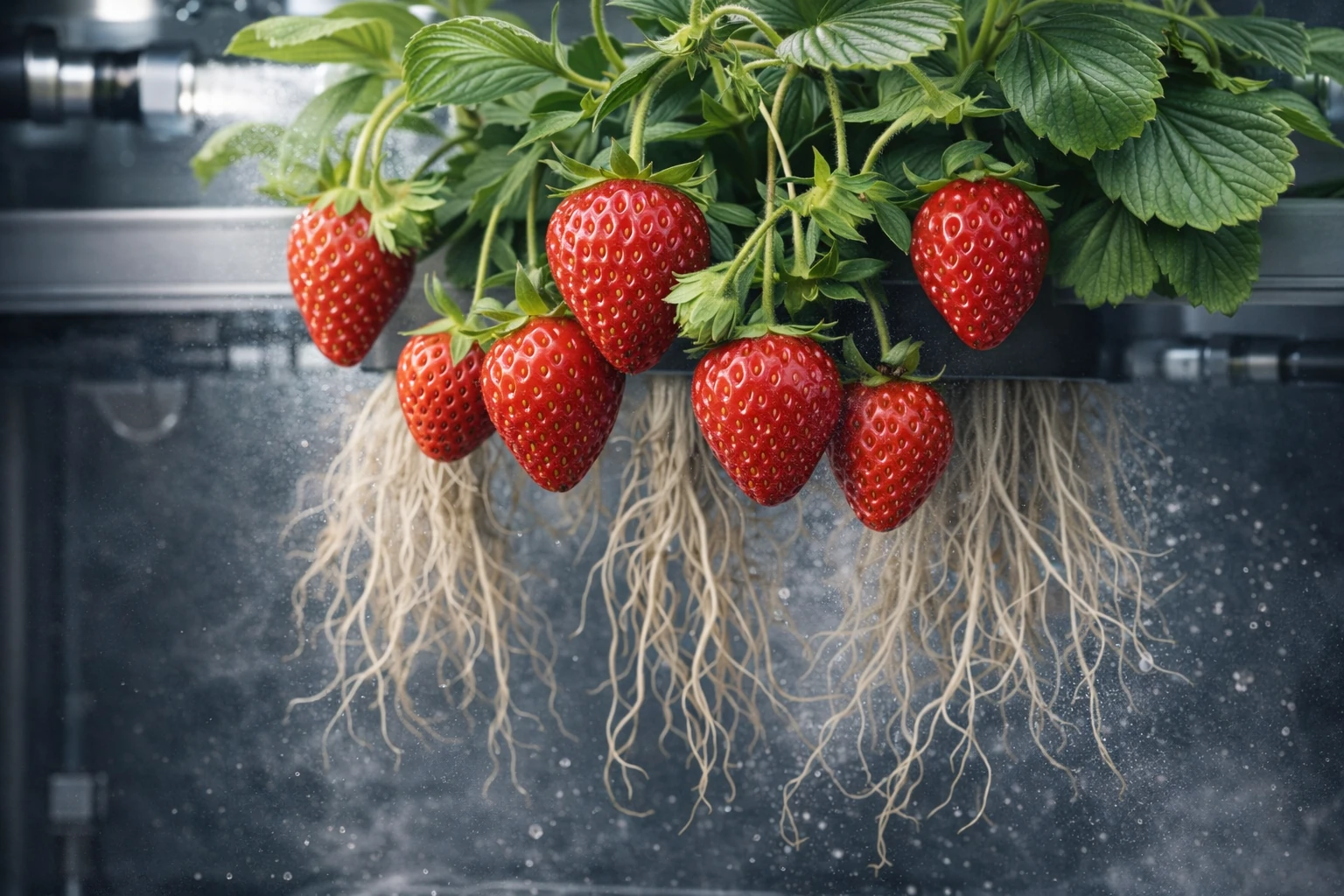
At a fundamental level, aeroponics is built around one principle: maximizing root access to oxygen while minimizing waste. By keeping roots exposed to air and intermittently misted, plants can absorb nutrients more effectively, resulting in faster growth cycles and healthier root systems.
Core Concepts Behind Aeroponics
Aeroponics systems operate on a closed-loop model designed for precision and control. The environment, rather than soil, becomes the primary growth medium.
Key concepts include:
- Air-based root zone that enhances oxygen availability
- Intermittent nutrient misting instead of continuous irrigation
- Controlled environments to manage temperature, humidity, and light
- Recirculation of water and nutrients to reduce resource consumption
These principles make aeroponics particularly suitable for indoor and vertical farming, where predictability and repeatability are essential for commercial viability.
Key Components of an Aeroponics System
While system complexity varies, most aeroponics setups share a common architecture.
| Component | Role in the System |
|---|---|
| Plant support structure | Holds plants in place without soil |
| Root chamber | Enclosed space that maintains humidity and darkness |
| Misting nozzles | Deliver fine nutrient droplets to roots |
| Nutrient reservoir | Stores and recirculates nutrient solution |
| Pumps and timers | Control misting frequency and duration |
| Sensors and controllers | Monitor pH, EC, temperature, and humidity |
Together, these components allow growers to fine-tune plant conditions at each growth stage, something that is difficult to achieve consistently in soil-based systems.
Benefits of Aeroponics Systems
Aeroponics offers a range of advantages over traditional and even other soilless farming methods:
- Water Efficiency: Uses up to 95% less water than soil farming by recycling nutrient solutions.
- Faster Growth Rates: Higher oxygen levels at the root zone accelerate nutrient uptake and plant development.
- Higher Yields per Square Foot: Ideal for vertical farming; enables dense planting and space optimization.
- Cleaner Produce: No soil means fewer pathogens and less need for pesticides.
- Mobility and Scalability: Easily adaptable to small indoor farms or large-scale commercial operations.
- Reduced Inputs: Fewer chemicals, fertilizers, and no soil preparation required.
Where Aeroponics Performs Best
Aeroponics is not intended to replace all forms of agriculture. Instead, it excels in environments where control, efficiency, and space optimization are priorities.
Typical use cases include:
- Urban indoor farms and vertical farming facilities
- Controlled-environment agriculture (CEA) operations
- Research institutions and plant science labs
- Extreme environments such as arid regions or space missions
Taken together, these benefits position aeroponics as a high-performance cultivation system rather than a low-cost alternative. Its value lies in precision, predictability, and sustainability, making it especially relevant for commercial growers and technology-driven agricultural models.
How Aeroponics Systems Work: From Root Suspension to Harvest
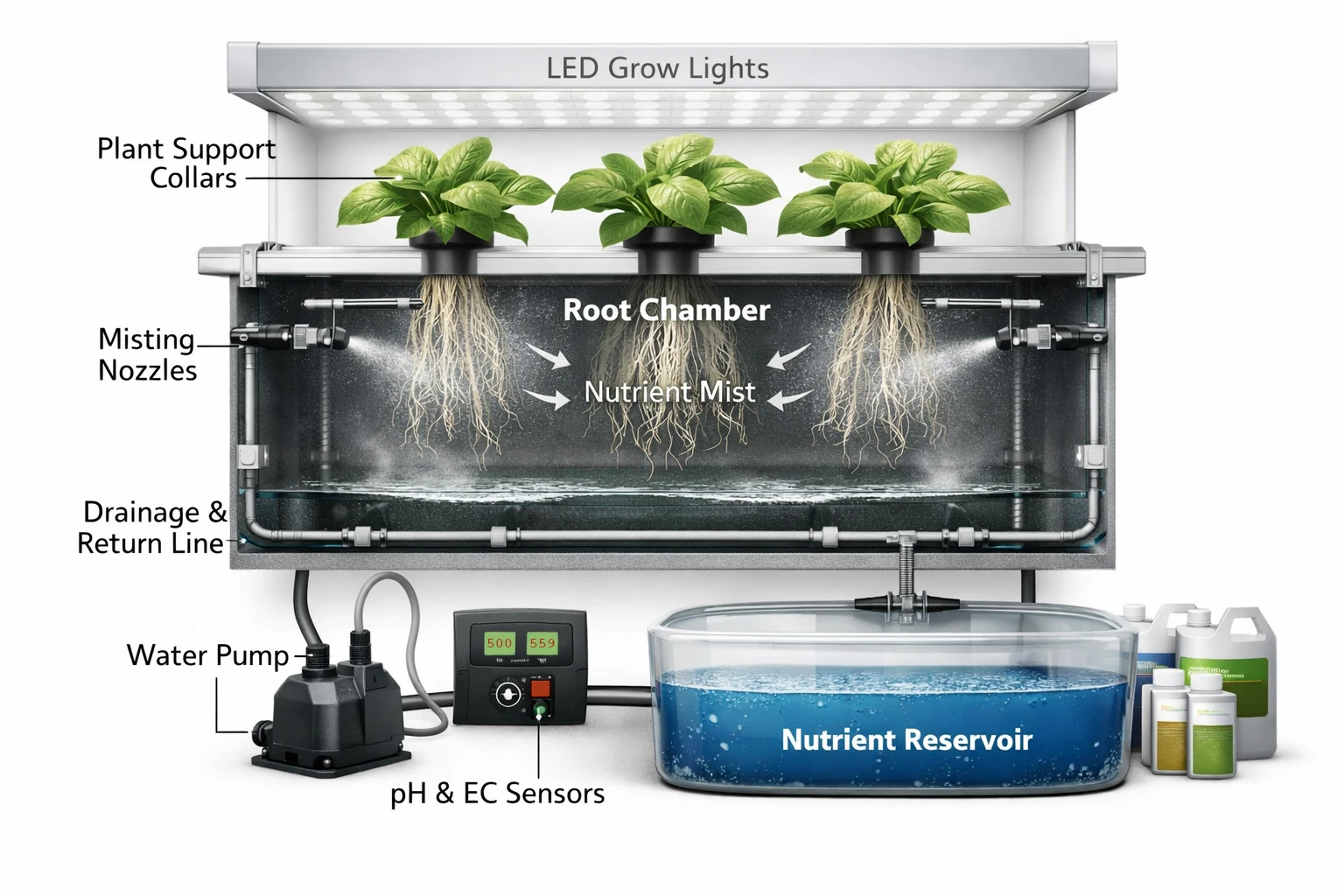
Aeroponics systems function by suspending plant roots in the air and periodically misting them with a nutrient-rich water solution. This direct exposure to both oxygen and nutrients creates an ideal environment for rapid, healthy plant growth.
Key Structural Components
A standard aeroponics setup is built around a few critical subsystems, each with direct performance implications.
| Component | Design Priority |
|---|---|
| Plant support | Stable plant positioning without root obstruction |
| Root chamber | Light-proof, humidity-controlled enclosure |
| Misting system | Uniform droplet size and spray coverage |
| Nutrient reservoir | Easy monitoring and contamination control |
| Pumps and plumbing | Pressure stability and clog resistance |
| Control system | Reliable timing and sensor integration |
Design simplicity often outperforms complexity, especially for commercial operations seeking predictable outcomes.
Step-by-Step Breakdown of Aeroponics Operation
Plant Support Structure
- Plants are held upright in small containers or inserts.
- These supports keep the plant stem stable while allowing roots to dangle freely.
Root Chamber
- The root zone is enclosed in a dark chamber to maintain humidity and block light (which can encourage algae growth).
- This chamber houses the roots and ensures optimal exposure to mist without drying out.
Misting System
- A pump pushes the nutrient solution through fine misting nozzles at regular intervals.
- The spray coats the roots with a fine aerosol of nutrients and water.
- Spray cycles are often every few minutes, depending on the plant type and system design.
Nutrient Solution Reservoir
- This contains a balanced mix of water and nutrients tailored to the plant’s growth stage.
- The solution is filtered and recirculated to minimize waste.
Timers and Automation
- Timers or digital controllers regulate misting frequency, duration, and intervals.
- Advanced systems include real-time monitoring for pH, temperature, electrical conductivity (EC), and humidity.
Lighting and Climate Control
- Most aeroponics setups are indoors or in greenhouses.
- LED grow lights simulate sunlight, while fans, dehumidifiers, and HVAC units maintain ideal air conditions.
Types of Aeroponics Systems
| Type | Key Features | Use Case |
|---|---|---|
| Low-Pressure Aeroponics (LPA) | Uses basic pump and misting setup | Home and DIY systems |
| High-Pressure Aeroponics (HPA) | Fine mist with pressure >60 psi for better absorption | Commercial/Research operations |
| Ultrasonic Fogponics | Uses ultrasonic discs to create fog | Experimental, root-sensitive crops |
Advantages of This Design
- Maximum Oxygenation: Roots receive ample oxygen, promoting vigorous growth.
- Precise Control: Nutrients and water delivery can be adjusted in real-time.
- Clean and Closed System: Reduces disease risks and is easier to sterilize than soil or hydroponics.
This design allows growers from hobbyists to large-scale operators to cultivate crops with minimal waste and maximum output. In the next section, we’ll look at the market scale and growth trajectory for aeroponics globally.
Global Aeroponics Market Size and Growth Outlook
The aeroponics systems market is in a phase of rapid expansion, driven by increasing demand for sustainable, high‑efficiency food production technologies, especially within controlled‑environment agriculture and urban farming. Multiple market research firms project strong growth over the coming decade, though exact figures vary by source depending on methodology and scope.
The global aeroponics market was valued at around USD 2.39–2.78 billion, reflecting growing commercial adoption and investment in aeroponic technology. Forecast estimates show the market continuing to expand significantly through the end of the decade and into the early 2030s, with a remarkable CAGR.
Market Growth Drivers
Growth in aeroponics is fueled by several intersecting trends:
- Urbanization & food security pressures: demand for localized, year‑round fresh produce in cities.
- Water and resource efficiency: aeroponics uses far less water than traditional soil farming.
- Technological integration: sensors, automation, and precision controls enhance productivity and scalability.
- Controlled Environment Agriculture (CEA) expansion: aeroponics is a key sub‑segment within the larger CEA and vertical farming markets, which are also forecast to grow robustly.
Regional and Segment-Level Aeroponics Adoption Trends
Aeroponics adoption varies significantly by region, shaped by local constraints such as water availability, land scarcity, energy costs, and policy support. Rather than a uniform global rollout, the market is evolving through region-specific use cases, with each geography emphasizing different commercial and strategic priorities.
North America: Commercial Scaling and Technology Leadership
North America represents one of the most commercially advanced aeroponics markets. Adoption is led by large indoor farming operators, technology startups, and research institutions, with the United States at the center of innovation.
Urban demand for locally grown produce, combined with venture capital inflows, has accelerated deployment in major metropolitan areas. Aeroponics is increasingly positioned as a yield-optimization layer within broader vertical farming operations rather than a standalone novelty.
Key characteristics include:
- Strong startup ecosystem and private investment
- Integration with AI, sensors, and farm management software
- Focus on leafy greens, herbs, and premium produce for retail chains
Europe: Sustainability-First Adoption
In Europe, aeroponics growth is tightly linked to sustainability, emissions reduction, and food-system resilience goals. Countries such as the Netherlands, Germany, and the United Kingdom are integrating aeroponics into controlled-environment agriculture strategies.
Rather than rapid scaling, European adoption emphasizes efficiency, energy optimization, and regulatory compliance. Energy prices and carbon targets strongly influence system design decisions.
Common regional themes:
- Alignment with EU sustainability and food safety policies
- Emphasis on renewable energy integration
- Public–private research pilots and urban farming initiatives
Asia-Pacific: Fastest Growth Driven by Urban Density
Asia-Pacific is the fastest-growing region for aeroponics, driven by population density, urbanization, and food security concerns. Countries such as China, Japan, South Korea, and Singapore are investing heavily in smart agriculture technologies.
Here, aeroponics is often deployed in compact, high-efficiency formats suited for dense cities, with strong government backing.
Regional drivers include:
- Limited arable land near cities
- Government-supported smart farming programs
- Emphasis on food self-sufficiency and import reduction
Middle East & Africa: Water Scarcity as the Primary Catalyst
In arid regions, aeroponics is emerging as a strategic response to extreme water constraints. Countries like the United Arab Emirates, Saudi Arabia, and Israel are piloting large-scale aeroponic and vertical farming projects.
Unlike other regions, adoption here is often state-driven, tied directly to national food security and long-term economic diversification plans.
Key patterns include:
- Integration with desalination and renewable energy
- Government incentives and sovereign investment
- Focus on reducing dependence on imported fresh produce
Latin America: Early-Stage but Emerging Potential
Latin America remains in an early adoption phase. Countries such as Brazil, Mexico, and Chile are experimenting with aeroponics mainly through pilot projects and academic partnerships.
Cost sensitivity and limited access to technical expertise currently constrain growth, but opportunities exist in export-oriented, high-value crops and pharmaceutical plant cultivation.
Segment-Level Insights
While geography shapes adoption patterns, market demand also varies by application segment.
| Segment | Strategic Relevance |
|---|---|
| Commercial indoor farming | Largest and fastest-scaling segment |
| Urban and residential systems | Growing demand for compact, modular units |
| Research and education | Universities, agtech labs, and space research |
| Pharmaceutical and specialty crops | High-margin, precision-driven use cases |
Overall, aeroponics is evolving as a context-dependent technology. Regions with water scarcity prioritize efficiency, dense urban regions emphasize space optimization, and developed markets focus on automation and scalability. These differences are shaping distinct commercial models and investment strategies across the global aeroponics landscape.
Key Drivers Accelerating the Adoption of Aeroponics
The adoption of aeroponics is being driven by a combination of technological maturity, resource constraints, and changing buyer expectations. Rather than emerging as an experimental farming method, aeroponics is increasingly positioned as a commercially viable response to structural weaknesses in traditional agriculture.
| Driver | What’s Changing | Strategic Impact |
|---|---|---|
| Precision agriculture tech | Automation and real-time controls | Higher yield consistency and scalability |
| Water scarcity | Rising competition for freshwater | Strong advantage in arid and regulated regions |
| Urbanization | Reduced access to nearby farmland | Growth of indoor and vertical farms |
| Climate volatility | Increased weather-related disruptions | Improved supply-chain resilience |
| Sustainability pressure | ESG and regulatory compliance | Lower environmental footprint and cleaner produce |
Technology-Enabled Precision Agriculture
Advances in sensors, automation, and farm management software have transformed aeroponics into a highly controllable production system. Modern setups allow growers to monitor and adjust nutrient delivery, misting frequency, and environmental conditions in real time.
This precision enables:
- Consistent crop quality across harvest cycles
- Predictable yields suitable for retail and contract farming
- Lower operational risk through continuous monitoring
Resource Efficiency and Sustainability Pressure
Water scarcity and sustainability mandates are central to aeroponics adoption. Closed-loop nutrient systems significantly reduce water usage while minimizing fertilizer runoff.
This matters because agricultural producers are facing:
- Rising water and energy costs
- Increasing ESG and sustainability reporting requirements
- Tighter regulations on water usage and chemical inputs
Urbanization and Food Localization
As urban populations grow, the distance between farms and consumers increases, adding cost and complexity to food supply chains. Aeroponics supports decentralized, indoor production close to demand centers, making it well suited for urban and peri-urban deployment.
Climate Risk and Supply-Chain Stability
Climate volatility has turned agricultural predictability into a strategic concern for food buyers. Aeroponics mitigates exposure to weather-driven disruptions by enabling controlled, year-round production.Investment and Policy Momentum
Aeroponics is also benefiting from increasing public and private support. Governments view advanced agriculture as critical to food security, while investors see long-term upside in scalable, technology-driven food production models.
Aeroponic Cultivation and Commercial Viability
Crop selection is one of the most decisive factors in aeroponics success. While the system offers exceptional control and efficiency, not all crops respond equally well to air-based root environments. The strongest candidates combine fast growth cycles, compact root structures, and high economic value.
Leafy greens and herbs account for the majority of aeroponics cultivation due to their high yield, short growth cycles, and strong market demand, especially in urban and controlled-environment settings. Leafy vegetables such as lettuce, spinach, and kale dominate the crop mix, while herbs and microgreens continue to gain share as premium, fast-turnover products. Fruits and flowers represent a smaller but growing segment as growers experiment with diversified aeroponic applications.
Core Crop Selection Criteria
Aeroponics favors crops that benefit from high oxygen availability and frequent nutrient delivery. From a commercial standpoint, the ideal crops also align with pricing power and predictable demand.
Key selection factors include:
- Shallow or fibrous root systems
- Short growth cycles
- High value per kilogram or per square meter
- Consistent demand in retail or institutional markets
Crops that require extensive root mass, long maturation periods, or low-margin bulk production are generally less suitable.
Crop Suitability Comparison
| Crop Category | Suitability | Commercial Rationale |
|---|---|---|
| Leafy greens | Very high | Fast cycles, strong demand |
| Culinary herbs | Very high | Premium pricing, compact growth |
| Strawberries | Medium–high | High value, higher complexity |
| Fruiting vegetables | Medium | Longer cycles, higher risk |
| Staple grains | Low | Poor economics in aeroponics |
Leafy Greens: The Commercial Backbone
Leafy greens are the most widely grown aeroponic crops due to their biological compatibility and strong market demand.
Common examples include:
- Lettuce varieties (romaine, butterhead, leaf lettuce)
- Spinach
- Arugula and mixed salad greens
These crops offer rapid harvest cycles, uniform growth, and low structural requirements, making them ideal for vertical stacking and high-density production.
Herbs: High Value and Strong Margins
Culinary herbs perform exceptionally well in aeroponics systems. Their compact root systems and premium pricing support strong unit economics.
Popular aeroponic herbs include:
- Basil
- Mint
- Cilantro
- Parsley
Herbs are particularly attractive for urban and hyperlocal farms supplying restaurants, retailers, and foodservice operators.
Fruiting and Specialty Crops
Some fruiting crops can be grown aeroponically, though they require more careful system tuning and structural support.
Examples include:
- Strawberries
- Cherry tomatoes
- Peppers (select varieties)
These crops are best suited for operators with advanced environmental control and higher risk tolerance due to longer growth cycles and greater complexity.
Propagation and Seed Crops
One of the most promising but less visible aeroponics applications is plant propagation, where uniformity and disease control are critical.
High-value propagation use cases include:
- Seed potatoes
- Disease-free seedlings
- Nursery plants for transplanting
Aeroponics enables faster multiplication rates and cleaner plant material compared to soil-based propagation.
Aeroponics delivers the greatest value when applied to high-value, fast-turnover crops rather than commodity agriculture. Most commercially successful farms start with leafy greens and herbs, then selectively expand into specialty crops as operational maturity improves.
Nutrient Management in Aeroponics: Precision, pH, and Performance
Nutrient management is the operational core of aeroponics systems. Because plants are grown without soil or growing media, every macro- and micronutrient must be delivered precisely through the misting solution. Small imbalances can quickly impact plant health, making nutrient strategy a critical determinant of yield, quality, and consistency.
Why Nutrient Precision Matters in Aeroponics
In soil-based farming, soil buffers nutrient fluctuations. Aeroponics removes that buffer entirely. As a result, nutrient availability, concentration, and timing have immediate physiological effects on plants.
Effective nutrient management delivers:
- Faster nutrient uptake due to high oxygen availability
- More efficient fertilizer usage with minimal runoff
- Highly uniform crop growth across production cycles
At the same time, mistakes propagate quickly, increasing the importance of monitoring and control.
Core Nutrients Required
Aeroponic nutrient solutions contain a balanced mix of macronutrients and micronutrients, dissolved in water and delivered as a fine mist.
| Nutrient Type | Key Elements | Role in Plant Growth |
|---|---|---|
| Macronutrients | Nitrogen, Phosphorus, Potassium | Leaf growth, root development, energy transfer |
| Secondary nutrients | Calcium, Magnesium, Sulfur | Cell structure, enzyme activation |
| Micronutrients | Iron, Zinc, Manganese, Boron | Metabolic and enzymatic functions |
pH and Electrical Conductivity (EC) Control
Two parameters dominate aeroponic nutrient management: pH and electrical conductivity (EC).
- pH affects nutrient availability; most aeroponic crops perform best between 5.5 and 6.5
- EC indicates total dissolved nutrients and must be tailored to crop demand and growth stage
Poor control of either can lead to nutrient lockout, toxicity, or stunted growth.
Misting Frequency and Nutrient Timing
Nutrient delivery in aeroponics is governed not only by composition, but also by misting cycles.
Key considerations include:
- Short, frequent misting to prevent root dehydration
- Adjusted intervals based on humidity and root mass
- Night-cycle tuning to prevent oversaturation
Optimized misting improves oxygen exposure while maintaining adequate hydration.
Water Quality and Filtration
Water quality directly affects system performance and longevity.
Critical water factors include:
- Low particulate content to prevent nozzle clogging
- Stable mineral composition
- Proper filtration and sterilization
Many commercial systems incorporate reverse osmosis, UV sterilization, or fine filtration to protect misting hardware and nutrient integrity.
Common Nutrient Management Challenges
Despite its efficiency, aeroponics introduces unique nutrient-related risks.
Frequent challenges include:
- Mineral buildup causing nozzle blockage
- Nutrient imbalances due to rapid uptake
- Biofilm formation in reservoirs and lines
These risks reinforce the need for routine system cleaning and monitoring.
In aeroponics, nutrient management is not a background task, it is a primary operational competency. Farms that treat nutrition as a data-driven process consistently outperform those relying on static formulas or manual checks.
Smart and Automated Aeroponics Technologies: IoT, AI, and Control Systems
As aeroponics systems scale, automation becomes the primary enabler of reliability and profitability. Manual operation is feasible at small scale, but commercial aeroponics depends on smart technologies that reduce human error, stabilize performance, and improve unit economics. Increasingly, aeroponics is evolving into a data-driven agricultural system rather than a purely mechanical one.
Technology Adoption Patterns in Smart Aeroponics Systems
A review of agritech studies shows that sensing and Industry 4.0 technologies are the most frequently implemented in smart aeroponics systems, followed by dispenser mechanisms and, to a lesser degree, renewable energy integration. This underscores that data acquisition and digital automation remain central research priorities in aeroponic innovation.
Role of Automation in Aeroponics
Because aeroponics systems are sensitive to timing, pressure, and nutrient balance, automation is not optional, it is foundational.
Automation enables:
- Precise misting intervals without manual intervention
- Continuous monitoring of pH, EC, temperature, and humidity
- Rapid response to system failures or environmental drift
This level of control directly improves crop consistency and reduces operational risk.
Core Smart Technology Components
Modern aeroponics systems integrate multiple layers of hardware and software.
| Technology Layer | Function |
|---|---|
| Sensors | Measure pH, EC, temperature, humidity, pressure |
| Controllers | Automate misting, lighting, and climate control |
| IoT connectivity | Enables remote monitoring and alerts |
| Data platforms | Aggregate and visualize system performance |
| Automation software | Executes predefined control logic |
Together, these components create a closed feedback loop between plant response and system operation.
IoT and Remote Monitoring
Internet of Things (IoT) integration allows aeroponics systems to be monitored and managed remotely. This is especially valuable for distributed or urban farms.
Key advantages include:
- Real-time alerts for pump, pressure, or power failures
- Centralized oversight across multiple farm sites
- Reduced need for constant on-site supervision
Remote visibility is now considered a baseline requirement for commercial-scale aeroponics.
AI and Data-Driven Optimization
As data accumulates, advanced operators apply analytics and machine learning to optimize performance.
Emerging use cases include:
- Predictive nutrient adjustments based on growth patterns
- Early detection of plant stress through sensor anomalies
- Yield forecasting and harvest planning
While still evolving, AI-driven optimization is becoming a competitive differentiator in large-scale operations.
Automation and Labor Efficiency
One of the strongest economic cases for automation is labor reduction. Aeroponics farms equipped with smart systems require fewer manual interventions and more predictable workflows.
Operational benefits include:
- Lower labor dependency
- Reduced training complexity
- Improved repeatability across production cycles
This is particularly valuable in regions facing agricultural labor shortages.
Commercial Applications of Aeroponics Across Food and Specialty Crops
Aeroponics systems have moved well beyond experimental setups and academic research. Today, they are being deployed across multiple commercial and institutional contexts where precision, consistency, and resource efficiency are critical. The technology’s flexibility allows it to serve very different end markets from fresh food retail to pharmaceuticals, each with distinct economic motivations.
Commercial Indoor and Vertical Farming
The most mature and commercially significant application of aeroponics is in indoor and vertical farming. Operators use aeroponics to maximize output per square meter while maintaining tight control over quality and production cycles.
In these environments, aeroponics is typically applied to:
- Leafy greens such as lettuce, spinach, and arugula
- Culinary herbs including basil, mint, and cilantro
- Specialty greens sold at premium price points
The value proposition is centered on high yield density, predictable harvests, and reduced water usage, making aeroponics attractive in urban markets with high land costs.
Urban and Hyperlocal Food Production
Aeroponics is increasingly used in hyperlocal food systems designed to shorten supply chains. Farms are being installed in warehouses, rooftops, and repurposed industrial buildings close to population centers.
This model is commercially relevant because it:
- Reduces transportation and cold-chain costs
- Enables same-day or next-day harvest-to-shelf delivery
- Appeals to consumers seeking fresh, locally grown produce
For retailers and foodservice providers, hyperlocal aeroponics supports brand differentiation and supply stability.
High-Value Crops and Pharmaceutical Applications
Beyond food production, aeroponics is gaining traction in high-value plant cultivation, particularly where purity and consistency are non-negotiable.
Common applications include:
- Medicinal and pharmaceutical plants
- Nutraceutical ingredients
- Seed potatoes and disease-free plant propagation
In these cases, aeroponics is favored for its ability to produce uniform, contamination-free plant material under tightly controlled conditions.
Research, Education, and Space Applications
Aeroponics remains an important tool in research institutions and educational settings. Universities and agricultural research centers use aeroponics to study root behavior, nutrient uptake, and plant genetics without soil interference.
Additionally, aeroponics has been tested in extreme environments, including space research, due to:
- Minimal water requirements
- Closed-loop nutrient systems
- Compatibility with confined environments
These applications continue to influence system design improvements that later transfer into commercial markets.
Commercial Application Landscape
| Application Area | Primary Objective | Why Aeroponics Fits |
|---|---|---|
| Indoor & vertical farming | Maximize yield per area | High oxygenation and dense planting |
| Urban food production | Localize supply chains | Compact, soil-free system design |
| Pharmaceutical crops | Consistency and purity | Controlled, sterile environments |
| Plant propagation | Disease-free seedlings | Reduced pathogen exposure |
| Research and education | Experimental precision | Full control over root conditions |
Strategic Takeaway
What unifies these use cases is not crop type, but economic logic. Aeroponics is deployed where control, predictability, and efficiency outweigh the need for low upfront costs. As technology costs decline and automation improves, many of these applications are expected to expand into mainstream commercial agriculture.
Top Companies and Innovations Shaping the Aeroponics Industry
The aeroponics market is characterized by private companies, fragmented innovation, and hybrid business models. Very few firms sell “pure” aeroponics hardware; most successful players integrate aeroponics into vertically integrated farming operations, combining proprietary systems with software, automation, and branded produce.
Industry Structure at a Glance
The competitive landscape can be grouped into three categories:
- Aeroponics-first vertical farming operators
- Modular system and container farming companies
- R&D-driven and hybrid controlled-environment agriculture players
Commercial traction has favored companies that treat aeroponics as a platform capability, not a standalone product.
Leading Aeroponics and Aeroponics-Led Companies
Competitive Positioning Snapshot
| Focus Area | Representative Companies | Strategic Strength |
|---|---|---|
| Large-scale aeroponics | AeroFarms, Plenty | Yield density and data-driven optimization |
| Pure aeroponics technology | LettUs Grow | IP depth and system performance |
| Containerized farming | Freight Farms, Growtainers | Rapid deployment and decentralization |
| Urban/compact systems | Agrilution | Design efficiency and automation |
| Foundational research | NASA | Long-term system validation |
AeroFarms
AeroFarms is widely regarded as the global reference point for commercial aeroponics. The company operates large-scale indoor vertical farms focused on leafy greens.
- Uses patented aeroponic misting and cloth-based root support systems
- Strong emphasis on data science, food safety, and traceability
- Revenue: Not publicly disclosed; company has raised $300M+ in disclosed funding and operates commercial farms supplying major U.S. retailers
Plenty
Plenty operates high-density vertical farms and incorporates aeroponic principles in its proprietary tower systems.
- Focus on AI-driven plant optimization
- Backed by strategic investors including large technology firms
- Revenue: Not publicly disclosed; reported multi-hundred-million-dollar capital base and long-term retail supply agreements
Freight Farms
Freight Farms provides modular container farms, some using aeroponic or hybrid soilless approaches.
- Targets decentralized, hyperlocal food production
- Strong presence in education, institutions, and retail pilots
- Revenue: Private; business model centers on hardware sales + recurring software subscriptions
Agrilution
Agrilution focuses on compact indoor farming systems for urban and residential markets.
- Premium positioning with automated climate and nutrient control
- Smaller scale but strong design and engineering focus
- Revenue: Private; operates primarily in European urban markets
LettUs Grow
LettUs Grow is a UK-based company specializing specifically in advanced aeroponics and fogponics systems.
- Supplies aeroponic systems to commercial growers and research institutions
- Strong IP portfolio in root-zone oxygenation
- Revenue: Private; revenue primarily B2B system sales and licensing
Growtainers
Growtainers builds containerized farming units, including aeroponics-based configurations.
- Focus on rapid deployment and controlled environments
- Used by retailers, military bases, and remote facilities
- Revenue: Private; business model centered on system sales
GrowCube
GrowCube operates modular indoor farms, primarily serving retail and foodservice clients in Europe.
Innovation focus:
- Small-footprint commercial systems
- Plug-and-play installation
- Consistent crop output for retail partners
NASA
While not a commercial producer, NASA has played a critical role in aeroponics research, particularly for space and extreme-environment agriculture.
- Early validation of aeroponics in microgravity
- Research contributions to nutrient delivery and root physiology
- Significant technology spillover into commercial systems
The aeroponics sector remains innovation-led rather than revenue-led. Most companies prioritize technology validation, cost reduction, operational reliability before aggressive revenue scaling. As energy efficiency improves and automation reduces labor intensity, commercial aeroponics is expected to transition from pilot-heavy deployments to standardized, scalable infrastructure.
Aeroponics vs Hydroponics vs Aquaponics: Strategic System Comparison
As controlled-environment agriculture expands, aeroponics is often evaluated alongside hydroponics and aquaponics. While all three systems eliminate soil, they differ significantly in system complexity, cost structure, scalability, and commercial suitability. Understanding these differences is critical for growers, investors, and operators selecting the right model for their objectives.
Conceptual Differences at a Glance
At a high level, the three systems differ in how nutrients are delivered to plant roots:
- Aeroponics delivers nutrients via fine mist in an air-based root environment
- Hydroponics submerges roots in nutrient-rich water
- Aquaponics uses nutrient waste from fish to fertilize plants
These differences directly influence efficiency, risk profile, and operational complexity.
Strategic Comparison Table
| Dimension | Aeroponics | Hydroponics | Aquaponics |
|---|---|---|---|
| Root environment | Suspended in air | Submerged in water | Water shared with fish |
| Water efficiency | Very high | High | Moderate |
| Oxygen availability | Maximum | Moderate | Moderate |
| System complexity | Medium–High | Medium | High |
| Biological risk | Low | Medium | High (fish + plants) |
| Yield potential | Very high | High | Medium |
| Scalability | Strong for vertical farms | Strong | Limited by fish balance |
| Maintenance skill level | High | Medium | High |
| Typical crops | Leafy greens, herbs, specialty crops | Leafy greens, fruiting crops | Leafy greens, herbs |
Aeroponics: Precision and Performance
Aeroponics offers the highest level of control over nutrient delivery and oxygen exposure. This results in faster growth rates and higher yields per square meter, particularly in vertical farming setups.
From a business standpoint, aeroponics is best suited for:
- High-density commercial indoor farms
- Regions with severe water constraints
- Operations prioritizing yield consistency and quality
The trade-off is higher technical sensitivity, power failures or misting interruptions can impact crops quickly if redundancy is not built in.
Hydroponics: Balanced and Widely Adopted
Hydroponics remains the most widely adopted soilless system due to its relative simplicity and proven scalability. Roots submerged in water are less sensitive to short-term system interruptions, making hydroponics more forgiving operationally.
Hydroponics works well for:
- Medium to large-scale commercial farms
- Operators seeking lower technical risk
- A wider variety of crops, including fruiting plants
However, oxygen availability is lower than in aeroponics, which can limit peak growth rates.
Aquaponics: Sustainability-Driven but Complex
Aquaponics integrates plant cultivation with fish farming, creating a closed-loop ecosystem. While attractive from a sustainability narrative, the system introduces biological complexity.
Aquaponics is typically chosen when:
- Dual revenue streams (plants + fish) are desired
- Sustainability and education are primary goals
- Scale expectations are moderate
Commercial scalability is often constrained by the need to maintain precise biological balance between fish and plants.
Barriers to Adoption and Technical Challenges in Aeroponics
Despite its long-term potential, aeroponics adoption remains constrained by cost, operational sensitivity, and execution complexity. These barriers explain why aeroponics is still concentrated among technology-forward operators rather than mainstream growers.
Capital Intensity and Cost Structure
Aeroponics systems require higher upfront investment than traditional farming and basic hydroponics. Specialized pumps, misting hardware, sensors, automation software, and climate-controlled infrastructure all contribute to elevated capital costs.
This limits adoption because:
- Payback periods can be long without premium pricing
- Small and mid-sized growers face financing constraints
- Scale is often required to justify investment
Operational and Reliability Risks
Because roots are suspended in air, aeroponics systems are highly dependent on uninterrupted misting and power supply. Even short failures can negatively impact crops.
Key operational risks include:
- Power outages and pump failures
- Nozzle clogging and maintenance issues
- Dependence on redundancy and monitoring systems
- These factors increase both complexity and operating costs.
Energy Dependence
While aeroponics is water-efficient, indoor operations can be energy-intensive due to lighting and climate control requirements. Electricity costs often determine commercial viability, particularly in regions with high energy prices.
Skills and Crop Limitations
Operating aeroponics requires technical expertise across plant science, engineering, and data management. At the same time, aeroponics is best suited to high-value crops like leafy greens and herbs, limiting its applicability for commodity agriculture.
Aeroponics is not constrained by feasibility, but by economics and execution. Near-term adoption will remain focused on capitalized, technology-driven operations targeting premium markets. As costs decline and systems become more robust, broader adoption is likely to follow.
Opportunities and Market Whitespace in Aeroponics Systems
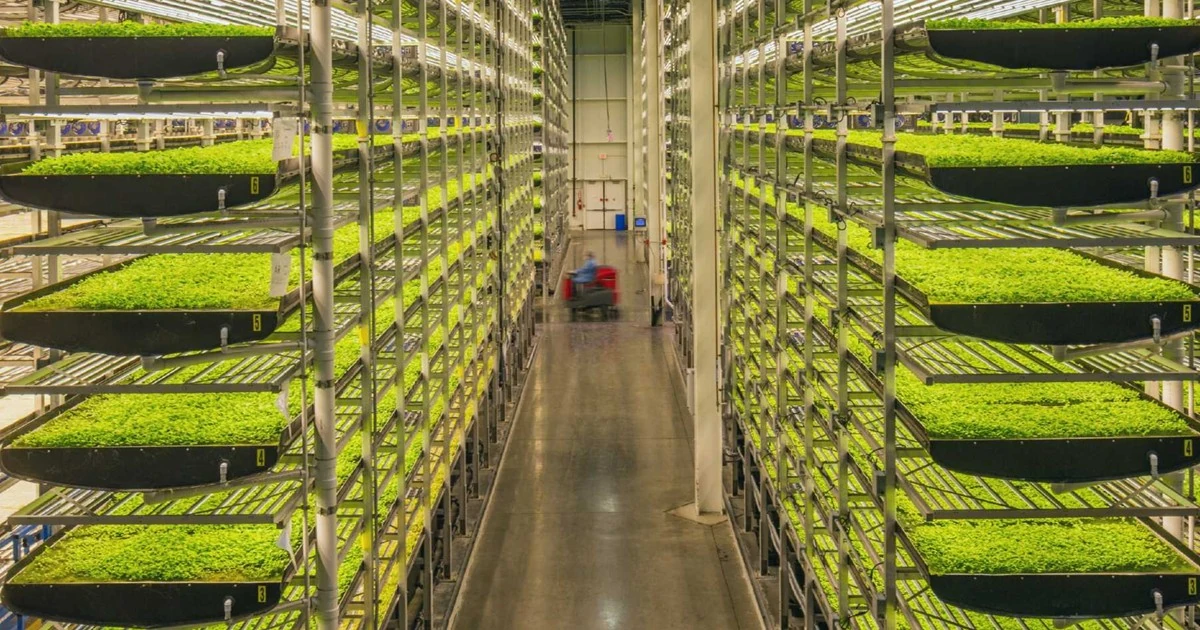
While aeroponics adoption today is concentrated among well-capitalized operators, the market still contains significant whitespace opportunities. Many gaps exist not in plant science itself, but in cost reduction, system design, software, and market-specific applications. These areas represent the next phase of value creation as aeroponics transitions from early adoption to broader commercialization.
Cost-Optimized and Mid-Scale Systems
Most current aeroponics solutions are designed either for large industrial farms or small hobby setups. There is a notable gap in mid-scale, cost-optimized systems tailored for regional growers, cooperatives, and institutional buyers.
This creates opportunities for:
- Modular systems with lower upfront capital requirements
- Retrofit solutions for existing greenhouses and warehouses
- Financing-friendly designs with faster payback periods
Mid-scale solutions could significantly expand the addressable market beyond large venture-backed operators.
Software, Automation, and “Aeroponics-as-a-Service”
As systems grow more complex, software becomes a primary differentiator. Many farms still rely on fragmented control tools, creating inefficiencies and operational risk.
Key whitespace areas include:
- Unified platforms for nutrient, climate, and crop management
- Predictive maintenance and failure-prevention software
- Subscription-based “aeroponics-as-a-service” models
This shift mirrors trends seen in industrial automation and smart manufacturing.
Energy-Efficient and Climate-Optimized Designs
Energy costs remain one of the largest barriers to profitability. Innovations that reduce energy intensity can dramatically improve unit economics.
High-potential areas include:
- Low-energy misting technologies
- Advanced LED optimization for aeroponic crops
- Integration with on-site renewables and energy storage
Energy efficiency is likely to become a decisive competitive advantage in the next phase of market development.
Crop Expansion Beyond Leafy Greens
Leafy greens dominate aeroponics today, but this concentration limits market growth. There is growing opportunity in adapting aeroponics for higher-value and specialized crops.
Emerging focus areas include:
- Medicinal and pharmaceutical plants
- Seed potato and plant propagation
- Specialty herbs and nutraceutical ingredients
Success in these categories could unlock new revenue streams with stronger margins.
Emerging Markets and Harsh Environments
Regions facing water scarcity, climate stress, or import dependency remain underpenetrated. Aeroponics is particularly well suited to these contexts.
Whitespace exists in:
- Arid and semi-arid regions
- Island nations and remote communities
- Government-backed food security programs
Localized system design and policy alignment will be key to unlocking these markets.
Opportunity Areas by Focus
| Opportunity Area | Why It Matters |
|---|---|
| Mid-scale systems | Expands market beyond large operators |
| Software platforms | Improves reliability and margins |
| Energy optimization | Directly impacts profitability |
| Crop diversification | Increases revenue potential |
| Emerging markets | Aligns with food security priorities |
Strategic Insight
The next wave of aeroponics growth will be driven less by novel farming concepts and more by execution excellence, lower costs, better software, energy efficiency, and clearer market fit. Companies that address these gaps will define the commercial future of aeroponics.
Strategic Implications for Agritech Startups and Investors
As aeroponics moves from experimentation toward commercialization, the strategic calculus for startups and investors is becoming clearer. Success in this market will depend less on proving that aeroponics works and more on how efficiently, reliably, and profitably it can be deployed at scale. This shift has important implications for product strategy, capital allocation, and investment timing.
Implications for Agritech Startups
For startups, aeroponics should be treated as an enabling platform, not the core value proposition by itself. The strongest opportunities lie in solving specific commercial pain points rather than building end-to-end farming operations from scratch.
High-impact strategic priorities include:
- Cost reduction and modularity to shorten payback periods
- Software-first differentiation, including monitoring, automation, and predictive analytics
- System reliability and redundancy to reduce crop-loss risk
- Targeted crop and market focus, especially premium or contract-based segments
Startups that bundle hardware, software, and services into clear, repeatable offerings are better positioned than those selling customized, capital-heavy installations.
Go-to-Market and Business Model Considerations
Aeroponics adoption is slowed by upfront cost and perceived risk. Business models that reduce friction can accelerate adoption.
Promising approaches include:
- Equipment leasing or usage-based pricing
- Subscription models for software and farm management
- Partnerships with retailers, institutions, or governments that provide demand certainty
Reducing customer risk is often more impactful than marginal technology improvements.
Implications for Investors
For investors, aeroponics should be evaluated as part of the broader controlled-environment agriculture and food systems infrastructure landscape. Returns are more likely to come from platforms and enablers than from single-farm operators.
Key investment lenses include:
- Unit economics and path to profitability
- Energy efficiency and operating cost control
- Ability to scale across regions and crops
- Exposure to policy support and food security programs
Investors should be cautious of growth narratives that rely heavily on continuous capital infusion without clear margin improvement.
Timing and Risk Profile
Aeroponics is currently in a transition phase, past technical validation but not yet at widespread, standardized deployment.
This creates a barbell risk profile:
- Higher risk, higher potential upside for early platform and IP investors
- Lower risk, steadier returns for later-stage infrastructure and services players
Investment timing should align with risk tolerance and expectations around adoption speed.
Strategic Alignment with Macro Trends
Aeroponics aligns strongly with several long-term macro trends:
- Urbanization and localized food systems
- Water scarcity and climate resilience
- Automation and digitization of agriculture
- ESG-driven capital allocation
However, alignment alone is not sufficient. Execution discipline and capital efficiency will ultimately determine winners.
For both startups and investors, aeroponics is best viewed as a long-term infrastructure opportunity, not a short-term land grab. The most durable value will be created by companies that improve economics, simplify operations, and integrate aeroponics into scalable, market-driven food systems.
Key Takeaways for Decision Makers
Aeroponics has moved beyond experimentation and is emerging as a strategic farming model at the intersection of sustainability, technology, and food security. For decision makers, the focus should be on economic fit and execution, not novelty.
Aeroponics Is Context-Specific
Aeroponics performs best in urban, water-scarce, and premium-crop environments. It should be viewed as a targeted solution rather than a universal replacement for traditional agriculture.
Execution Outweighs Technology
Most adoption challenges are operational, not scientific. Success depends on:
- Clear unit economics
- Energy-efficient system design
- Strong reliability and risk management
Value Is Moving Beyond Farm Ownership
The strongest opportunities lie in software, automation, and scalable system design, not just in operating farms. Platform and enablement models are gaining strategic importance.
Market Fit Is Critical
Aeroponics works when aligned with high-value crops, predictable demand, and regions facing land or water constraints. Poor market alignment remains the biggest risk.
Executive Insight
Aeroponics is a long-term infrastructure opportunity. Leaders who pilot selectively, focus on economics, and scale with discipline will be best positioned as the market matures.