Introduction
Mobile Banking has transformed the way customers interact with financial institutions, making everyday banking faster, more convenient, and accessible from anywhere. From fund transfers and bill payments to investments and loan applications, smartphones have become the primary banking channel for millions of users. This shift has accelerated digital transformation across the banking industry and increased the demand for innovative Fintech Solutions that deliver secure and personalized financial experiences.
JPMorgan Chase, the largest bank in the United States by assets, has embraced this transformation by making technology a core part of its business strategy. Through significant investments in artificial intelligence, cloud computing, cybersecurity, and data analytics, the bank has built a robust digital ecosystem centered on Mobile Banking. This case study explores the strategies, technologies, challenges, and business outcomes behind JPMorgan Chase’s digital transformation, highlighting how Fintech Solutions have helped strengthen its leadership in the evolving financial services industry.
The Rise of Mobile Banking
The banking industry has rapidly shifted from branch-centric services to digital-first experiences, driven by widespread smartphone adoption and changing customer expectations. Today, Mobile Banking has become the preferred way for customers to manage their finances, encouraging banks to invest in Digital Banking, AI-powered services, and Fintech Solutions to remain competitive.
Key Factors Driving the Growth of Mobile Banking
Several trends have reshaped the banking landscape over the past few years:
- Increasing smartphone and internet penetration across global markets.
- Growing preference for cashless and contactless payments.
- Rising demand for real-time and personalized banking services.
- Greater customer expectations for secure and frictionless digital experiences.
- Continuous innovation in cloud computing, artificial intelligence, and data analytics.
These factors have made Mobile Banking a necessity rather than a competitive advantage, compelling both traditional banks and digital-first institutions to continuously innovate.
Industry Shift: Traditional Banking vs. Digital-First Banking
| Traditional Banking | Digital-First Banking |
|---|---|
| Branch-centric services | Mobile-first customer experience |
| Manual paperwork | Paperless digital onboarding |
| Limited banking hours | 24/7 account access |
| Longer processing times | Instant transactions |
| Generic financial products | Personalized recommendations using AI |
| Higher operational costs | Automated and scalable operations |
Recognizing these industry shifts, JPMorgan Chase accelerated its investment in Mobile Banking and Fintech Solutions, positioning itself to meet evolving customer needs while strengthening its leadership in digital banking.
Why JPMorgan Chase Accelerated Its Digital Transformation
JPMorgan Chase recognized that customer expectations were rapidly shifting toward digital-first banking experiences. To maintain its leadership, the bank needed to strengthen Mobile Banking while adopting advanced Fintech Solutions that could deliver faster, more secure, and personalized financial services. The growing success of fintech companies further accelerated the bank’s digital transformation strategy.
Key Drivers Behind the Transformation
Evolving Customer Expectations
Customers increasingly expected banking services to be simple, fast, and accessible through mobile devices. To meet these expectations, JPMorgan Chase focused on:
- Simplifying the mobile banking experience.
- Expanding self-service capabilities.
- Delivering personalized financial insights.
- Enabling faster and more secure transactions.
Technology Investment
Technology has become one of JPMorgan Chase’s biggest strategic priorities. According to the company’s 2024 Annual Report, the bank invested approximately $17 billion in technology during 2024, supporting artificial intelligence, cloud infrastructure, cybersecurity, digital payments, and software development.
Responding to Fintech Competition
To compete with digital-first financial firms, JPMorgan Chase accelerated the adoption of:
- Artificial intelligence and machine learning.
- Cloud-based infrastructure.
- API-driven banking services.
- Automation and advanced analytics.
Digital Transformation Goals
JPMorgan Chase’s digital strategy extends beyond launching new features. Its long-term objectives include:
| Strategic Goal | Business Purpose |
|---|---|
| Enhance customer experience | Deliver intuitive and personalized digital banking services |
| Strengthen cybersecurity | Protect customers against evolving fraud and cyber threats |
| Improve operational efficiency | Reduce manual processes through automation and AI |
| Expand digital payments | Support faster and more secure payment ecosystems |
| Drive sustainable growth | Increase customer engagement while lowering operating costs |
These goals align with the bank’s broader vision of becoming a technology-driven financial institution capable of adapting to changing customer needs and market conditions.
Long-Term Digital Vision
JPMorgan Chase views digital transformation as an ongoing strategy rather than a one-time initiative. By placing Mobile Banking at the center of its customer experience and continuously investing in Fintech Solutions, the bank has built a scalable digital ecosystem that supports innovation, operational efficiency, and long-term growth.
Challenges in Mobile Banking Expansion
As JPMorgan Chase expanded its Mobile Banking capabilities, it faced several challenges common to large financial institutions. The bank needed to modernize legacy technology, meet rising customer expectations, strengthen cybersecurity, and respond to increasing competition from fintech companies. At the same time, every digital initiative had to comply with strict financial regulations, making transformation both complex and resource-intensive.
Key Challenges
- Legacy systems: Aging infrastructure made it difficult to introduce new digital services quickly and efficiently.
- Changing customer expectations: Customers demanded seamless mobile experiences, instant transactions, and personalized financial services.
- Cybersecurity risks: The rise in digital transactions increased the need for advanced fraud detection, encryption, and secure authentication.
- Fintech competition: Digital-first companies raised the bar with faster innovation and customer-centric financial products.
- Regulatory compliance: New digital services had to meet stringent requirements related to data privacy, AML, KYC, and cybersecurity.
Despite these challenges, JPMorgan Chase turned them into opportunities by investing heavily in technology and innovation. These efforts laid the foundation for its leadership in Mobile Banking and the successful adoption of advanced Fintech Solutions.
Mobile Banking Strategy and Digital Innovation
JPMorgan Chase’s digital transformation was driven by a clear objective: make Mobile Banking the primary touchpoint for customers while using advanced technology to deliver faster, safer, and more personalized financial services. Instead of treating its mobile app as a standalone product, the bank integrated it with its broader digital ecosystem, enabling customers to manage nearly every aspect of their financial lives from a single platform.
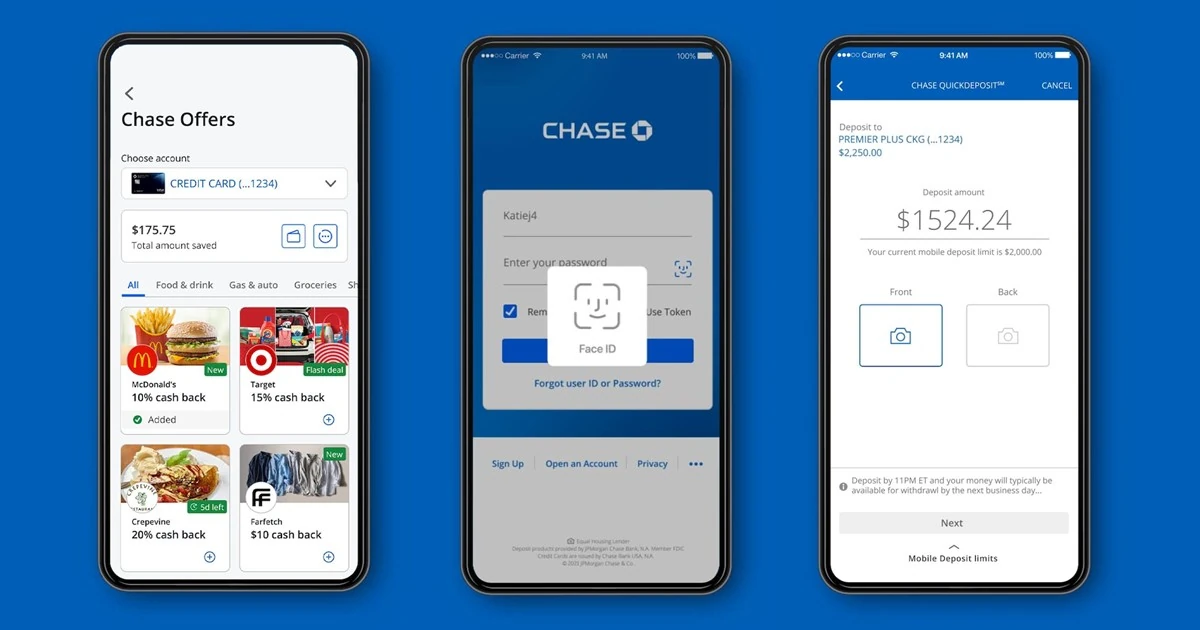
The strategy focused on improving customer experience, increasing operational efficiency, and building long-term loyalty through continuous innovation.
Building a Customer-First Mobile Experience
The Chase Mobile® app has evolved into a comprehensive banking platform that goes far beyond basic account management. Customers can perform a wide range of banking activities without visiting a branch, making banking more convenient and accessible.
Key capabilities include:
- View account balances and transaction history.
- Transfer money between accounts.
- Pay bills and schedule recurring payments.
- Deposit checks using mobile check deposit.
- Send and receive money through Zelle®.
- Monitor credit card spending and rewards.
- Access investment and wealth management accounts.
- Receive real-time transaction alerts.
By bringing these services together in a single application, JPMorgan Chase has created a seamless Digital Banking experience that encourages customers to engage with the platform more frequently.
AI-Driven Personalization
Artificial intelligence has become an important part of the bank’s digital strategy. Rather than offering the same experience to every customer, JPMorgan Chase uses AI and advanced analytics to provide more personalized financial services.
These technologies help the bank:
- Deliver customized spending insights.
- Recommend relevant banking products.
- Detect unusual account activity.
- Improve customer support through intelligent automation.
- Enhance risk assessment and fraud prevention.
This data-driven approach improves customer satisfaction while helping the bank make better business decisions.
Digital Payments and Wallet Integration
Digital payments are another key pillar of JPMorgan Chase’s Mobile Banking strategy. As customers increasingly adopt cashless transactions, the bank has expanded its payment ecosystem to support faster and more flexible payment options.
Its digital payment capabilities include:
- Peer-to-peer payments through Zelle®.
- Integration with Apple Pay®, Google Pay™, and Samsung Wallet.
- Contactless card payments.
- Real-time payment services.
- Digital card management within the mobile app.
These features allow customers to make secure payments across online, in-store, and mobile channels while reducing dependence on cash and physical cards.
Security and Fraud Prevention
Security remains one of the bank’s highest priorities. As digital transactions continue to grow, JPMorgan Chase has invested heavily in technologies that protect customer accounts without making the banking experience more complicated.
Some of the security measures include:
- Biometric authentication using fingerprint or facial recognition.
- Multi-factor authentication.
- End-to-end encryption for sensitive data.
- AI-powered fraud detection systems.
- Instant security alerts for suspicious activity.
This layered approach helps protect customer information while maintaining a smooth user experience.
Continuous Innovation Through Technology
Rather than releasing occasional upgrades, JPMorgan Chase continuously enhances its mobile platform by introducing new features, improving performance, and responding to customer feedback. The bank’s significant annual technology investments support ongoing innovation across software development, cloud infrastructure, cybersecurity, and Banking Technology.
This culture of continuous improvement has enabled JPMorgan Chase to keep pace with changing customer expectations and emerging fintech competitors. By combining a customer-first mindset with advanced Fintech Solutions, the bank has built a scalable digital platform that strengthens customer engagement, improves operational efficiency, and reinforces its leadership in the rapidly evolving financial services industry.
Fintech Solutions Driving Business Growth
While Mobile Banking serves as the primary interface for customers, the technology behind it is powered by a wide range of Fintech Solutions. JPMorgan Chase has invested heavily in emerging technologies to improve operational efficiency, strengthen security, enhance customer experiences, and support long-term business growth. Instead of relying on a single innovation, the bank has built a technology ecosystem where multiple solutions work together to deliver seamless financial services.
Artificial Intelligence and Machine Learning
Artificial intelligence (AI) and machine learning have become central to JPMorgan Chase’s digital strategy. These technologies help the bank automate routine processes, analyze large volumes of financial data, detect fraud, and provide personalized customer experiences.
Some of the key applications include:
- AI-powered fraud detection and risk monitoring.
- Personalized financial insights and recommendations.
- Intelligent customer support and virtual assistance.
- Credit risk assessment and underwriting.
- Process automation across business operations.
The adoption of AI has enabled the bank to improve decision-making while reducing manual effort and operational costs.
Cloud Computing and Data Analytics
JPMorgan Chase continues to modernize its technology infrastructure by expanding cloud capabilities and leveraging advanced data analytics. Cloud platforms provide greater scalability, faster deployment of digital services, and improved system resilience.
At the same time, data analytics helps the bank better understand customer behavior, optimize products, and identify emerging market trends. These insights support more informed business decisions and continuous improvements across digital banking services.
Blockchain and Payment Innovation
The bank has been one of the early adopters of blockchain technology within the financial services sector. Through initiatives such as Kinexys by J.P. Morgan (formerly Onyx), JPMorgan Chase has explored blockchain applications for wholesale payments, cross-border transactions, and digital asset infrastructure.
These innovations aim to:
- Improve transaction speed.
- Increase payment transparency.
- Reduce settlement times.
- Enhance operational efficiency in institutional banking.
Although blockchain initiatives primarily support enterprise clients, they demonstrate the bank’s commitment to investing in next-generation financial technologies.
Open Banking and API Ecosystem
As the financial industry becomes increasingly interconnected, JPMorgan Chase has expanded its use of secure APIs to support Open Banking initiatives. APIs enable customers to safely connect their bank accounts with trusted third-party financial applications while maintaining control over their data.
This approach encourages innovation by allowing fintech companies and financial service providers to build value-added solutions on top of secure banking infrastructure.
Technology as a Growth Engine
Rather than viewing technology as a support function, JPMorgan Chase treats it as a strategic driver of business growth. Investments in AI, cloud computing, blockchain, automation, and Fintech Solutions have strengthened customer engagement, improved operational efficiency, and enhanced the bank’s ability to compete in an increasingly digital financial landscape.
By combining continuous innovation with its trusted banking brand, JPMorgan Chase has built a scalable technology foundation that supports both current customer needs and future opportunities in digital finance.
Strategic Partnerships and Acquisitions
JPMorgan Chase has complemented its in-house technology investments with strategic acquisitions and partnerships to accelerate innovation in Mobile Banking and Fintech Solutions. Rather than developing every capability internally, the bank has selectively acquired technology companies and collaborated with fintech firms to strengthen its digital ecosystem, improve customer experiences, and expand its product offerings.
Key Acquisitions
Several acquisitions have played an important role in enhancing the bank’s technology capabilities:
| Acquisition | Year | Strategic Purpose |
|---|---|---|
| WePay | 2017 | Expanded integrated payment solutions for small businesses and software platforms. |
| InstaMed | 2019 | Strengthened healthcare payment processing and digital payment capabilities. |
| Nutmeg | 2021 | Entered the UK digital wealth management market with an established robo-advisory platform. |
| Renovite Technologies | 2022 | Enhanced cloud-native payment infrastructure and payment processing capabilities. |
These acquisitions allowed JPMorgan Chase to accelerate innovation while reducing the time required to build new digital capabilities from scratch.
Fintech and Technology Partnerships
In addition to acquisitions, the bank has formed partnerships with technology providers and fintech companies to expand customer services and improve operational efficiency. These collaborations focus on areas such as:
- Digital payments and merchant services.
- Cloud infrastructure modernization.
- Open Banking integrations through secure APIs.
- Artificial intelligence and data analytics.
- Fraud prevention and cybersecurity.
By combining its financial expertise with external innovation, JPMorgan Chase has been able to introduce new digital services more quickly while maintaining the security and reliability expected from a global financial institution.
Strengthening the Digital Ecosystem
Strategic collaborations have enabled JPMorgan Chase to move beyond traditional banking and build a connected financial ecosystem. Whether supporting merchants through integrated payment solutions or expanding digital wealth management, these initiatives reinforce the bank’s long-term vision of delivering seamless, technology-driven financial services.
Together, these acquisitions and partnerships have strengthened JPMorgan Chase’s leadership in Mobile Banking, expanded its portfolio of Fintech Solutions, and positioned the bank to adapt more quickly to the evolving financial services landscape.
Business Impact and Measurable Results
JPMorgan Chase’s long-term investment in Mobile Banking and Fintech Solutions has delivered measurable business outcomes across customer engagement, digital adoption, financial performance, and operational efficiency. By continuously investing in technology and innovation, the bank has strengthened its competitive position while meeting the growing demand for digital-first financial services.
Growth in Digital Customer Adoption
Digital channels have become the primary way customers interact with the bank. According to JPMorgan Chase’s latest annual reporting, digital engagement continues to increase as more customers prefer mobile and online banking over traditional branch visits.
Some notable indicators include:
- Over 69 million digitally active customers.
- More than 58 million active mobile customers.
- Continued growth in mobile logins and digital transactions.
- Increasing adoption of self-service banking features.
These figures demonstrate how Mobile Banking has become central to the bank’s customer engagement strategy.
Digital and Mobile Banking Growth, 2021–2025
JPMorgan Chase’s Mobile Banking expansion is visible in both customer adoption and transaction activity. Active mobile customers increased from 45.45 million in 2021 to 61.74 million in 2025, representing growth of approximately 35.8%. Mobile adoption also grew faster than overall digital adoption, raising mobile users’ share of the digital customer base from 77.2% to 82.7%. Over the same period, total payments transaction volume increased from $5.0 trillion to $7.0 trillion. These trends do not prove that mobile usage alone produced the increase in payment volume, but together they show that JPMorgan Chase’s digital ecosystem expanded significantly as smartphones became a more important customer access channel.
Operational Efficiency Through Technology
Digital transformation has also improved internal operations by reducing manual processes and increasing automation.
Key business benefits include:
- Faster processing of customer transactions.
- Improved fraud detection using AI and machine learning.
- Reduced dependence on branch-based services.
- More efficient customer onboarding.
- Better use of data analytics for decision-making.
These improvements have helped lower operating complexity while enhancing service quality across multiple business segments.
Strengthening Market Leadership
Beyond financial performance, JPMorgan Chase has strengthened its position as one of the world’s leading digital banks. Its combination of trusted banking services, continuous technology investment, and customer-focused innovation enables the bank to compete effectively with both traditional financial institutions and digital-native fintech companies.
The success of its Mobile Banking platform reflects a broader strategy of using technology not only to improve customer convenience but also to drive sustainable business growth. As digital adoption continues to rise, JPMorgan Chase is well positioned to capitalize on future opportunities through ongoing investment in Fintech Solutions and next-generation banking technologies.
JPMorgan Chase Competitive Analysis
JPMorgan Chase operates in one of the world’s most competitive banking markets, where traditional financial institutions compete not only with each other but also with digital-first fintech companies. While established banks leverage their scale, trust, and diversified financial services, fintech firms differentiate themselves through speed, innovation, and customer-centric digital experiences. To maintain its leadership, JPMorgan Chase has continuously strengthened its Mobile Banking platform and expanded its Fintech Solutions portfolio.
JPMorgan Chase vs. Bank of America
Bank of America has been a strong competitor in digital banking, particularly through its AI-powered virtual assistant, Erica, and its mobile banking platform. However, JPMorgan Chase has differentiated itself by investing heavily in technology infrastructure, digital payments, and advanced analytics, enabling continuous improvements across its consumer and commercial banking businesses.
Competitive Comparison
| Feature | JPMorgan Chase | Bank of America | Wells Fargo | PayPal | Revolut |
|---|---|---|---|---|---|
| Mobile Banking Platform | ✓ Advanced | ✓ Advanced | ✓ Advanced | ✓ Digital Payments | ✓ Digital Banking |
| AI-Powered Services | ✓ Extensive | ✓ Erica AI | ✓ Growing | Limited | Limited |
| Investment Services | ✓ Comprehensive | ✓ Comprehensive | ✓ Available | No | Limited |
| Global Banking Presence | ✓ Extensive | Moderate | Moderate | Global Payments | International |
| Branch Network | ✓ Large | ✓ Large | ✓ Large | No | No |
| Technology Investment | Very High | High | High | High | High |
Key Competitive Advantages
JPMorgan Chase continues to strengthen its market position through several strategic advantages:
- Significant annual investment in technology and innovation.
- Large and growing Mobile Banking customer base.
- Strong cybersecurity and fraud prevention capabilities.
- Broad portfolio spanning consumer, commercial, investment, and wealth management services.
- Continuous adoption of AI, cloud computing, blockchain, and other Fintech Solutions.
- Strong brand reputation and global customer trust.
By combining the stability of a leading global bank with continuous digital innovation, JPMorgan Chase has successfully positioned itself to compete with both established financial institutions and rapidly growing fintech companies. Its balanced approach to technology investment, customer experience, and operational excellence remains a key differentiator in the evolving digital banking landscape.
JPMorgan Chase SWOT Analysis
JPMorgan Chase’s expansion into Mobile Banking and Fintech Solutions has strengthened its competitive position, but it also presents new opportunities and challenges. The following SWOT analysis highlights the key internal and external factors influencing the bank’s long-term digital strategy.
| Strengths | Weaknesses |
|---|---|
| Largest U.S. bank by assets with a strong global presence. | Legacy banking systems require continuous modernization. |
| Significant annual investment in technology and innovation. | High technology and cybersecurity investment costs. |
| Large and growing digital and mobile customer base. | Complex organizational structure can slow implementation. |
| Advanced AI, data analytics, and fraud detection capabilities. | Dependence on strict regulatory approvals for new services. |
| Diversified business across consumer, commercial, investment, and wealth management. | Integration challenges following acquisitions and technology upgrades. |
| Opportunities | Threats |
|---|---|
| Expansion of AI-driven financial services and personalization. | Increasing competition from fintech startups and digital-only banks. |
| Growth in digital payments and embedded finance. | Rising cybersecurity threats and financial fraud. |
| Wider adoption of Open Banking and API ecosystems. | Frequent changes in financial regulations and compliance requirements. |
| Expansion into new international digital markets. | Rapid technological change requiring continuous investment. |
| Increasing demand for cloud-based and mobile-first banking services. | Economic uncertainty affecting lending and customer spending. |
Key Insights from the SWOT Analysis
JPMorgan Chase’s greatest strength lies in its ability to combine financial scale with continuous innovation. Its sustained investment in Mobile Banking, artificial intelligence, cybersecurity, and cloud technologies has helped the bank build a strong digital ecosystem that is difficult for many competitors to replicate.
At the same time, maintaining this leadership requires significant ongoing investment. Rapid technological advancements, evolving customer expectations, and increasing regulatory requirements mean that innovation must remain a continuous process rather than a one-time initiative.
Looking ahead, emerging areas such as AI-powered banking, embedded finance, digital payments, and Open Banking present substantial growth opportunities. However, success will depend on the bank’s ability to manage cybersecurity risks, respond to fintech competition, and adapt quickly to an ever-changing financial landscape through innovative Fintech Solutions.
Future Outlook of Mobile Banking and Fintech Solutions
The future of banking will be driven by artificial intelligence, real-time payments, cloud computing, and personalized digital experiences. As customers increasingly prefer digital-first financial services, Mobile Banking is expected to become the primary channel for everyday banking. To stay ahead, JPMorgan Chase continues to invest in technology while maintaining a strong focus on security, compliance, and customer trust.
Key Trends to Watch
Several trends are expected to shape the next phase of digital banking:
- Wider adoption of AI-powered banking services.
- Continued growth of real-time payments.
- Expansion of embedded finance and Open Banking.
- Increased use of cloud-based infrastructure.
- Greater personalization through data analytics.
- Stronger focus on cybersecurity and digital identity.
Future Focus Areas
| Strategic Area | Expected Impact |
|---|---|
| Artificial Intelligence | Improved automation and customer experience |
| Digital Payments | Faster and more secure transactions |
| Cloud Computing | Better scalability and operational efficiency |
| Open Banking | Stronger integration with fintech platforms |
| Blockchain | More efficient payment and settlement systems |
JPMorgan Chase’s continued investment in Mobile Banking and Fintech Solutions positions it well for future growth. By combining technological innovation with customer trust and regulatory expertise, the bank is well-equipped to adapt to evolving market demands and maintain its leadership in digital banking.
Key Takeaways and Business Lessons
JPMorgan Chase’s expansion into Mobile Banking demonstrates how established financial institutions can successfully adapt to rapid technological change. Instead of treating digital transformation as a standalone project, the bank has embedded technology into its long-term business strategy through continuous investment, innovation, and customer-centric product development. Its adoption of advanced Fintech Solutions has not only improved customer experience but also strengthened operational efficiency and competitive positioning.
Key Business Lessons
- Make digital transformation a long-term strategy: Continuous technology investment delivers sustainable competitive advantages.
- Put customers at the center of innovation: Simple, secure, and personalized digital experiences drive higher adoption and engagement.
- Leverage emerging technologies: Artificial intelligence, cloud computing, data analytics, and automation improve both customer service and operational efficiency.
- Balance innovation with security: Strong cybersecurity and regulatory compliance are essential for maintaining customer trust.
- Embrace collaboration: Strategic partnerships and acquisitions can accelerate innovation and expand digital capabilities more quickly than building everything internally.
Conclusion
JPMorgan Chase has successfully evolved from a traditional banking institution into a technology-driven financial leader. By investing heavily in Mobile Banking and integrating advanced Fintech Solutions across its operations, the bank has strengthened customer engagement, improved efficiency, and maintained its competitive edge in an increasingly digital financial landscape.
As the banking industry continues to evolve, the company’s strategy highlights an important lesson for financial institutions worldwide: sustainable growth depends not only on financial strength but also on the ability to innovate continuously, respond to changing customer expectations, and embrace emerging technologies.