
Introduction: The Race Toward the Future of Mobility
The way we move from one place to another has always shaped how economies grow, cities expand, and people connect. From steam engines to commercial aviation, every leap in transportation has solved one big problem while creating new challenges. Today, as global travel demand surges and sustainability becomes non-negotiable, the world is once again searching for a breakthrough.
This is where Hyperloop TT Technology enters the conversation.
At its core, Hyperloop is not just an upgrade to existing systems. It is a complete rethinking of how transportation should work. Instead of battling air resistance and friction, it eliminates them almost entirely. Instead of relying on traditional tracks or flight paths, it introduces a sealed, controlled environment built for speed and efficiency.
The Problem: Why Traditional Transportation Is Reaching Its Limits
Before understanding the promise of Hyperloop TT Technology, it’s important to look at the limitations of the systems we rely on today. While rail, road, and air transport have evolved over decades, they are now hitting structural and operational ceilings.
The issue isn’t just speed. It’s efficiency, scalability, and sustainability all at once.
Speed vs Efficiency Trade-Off
Every existing mode of transport comes with a compromise:
| Transport Mode | Speed Level | Energy Efficiency | Key Limitation |
|---|---|---|---|
| Airplanes | Very High | Low | High fuel consumption & delays |
| High-Speed Trains | High | Medium-High | Limited by friction & tracks |
| Road Transport | Low-Medium | Low | Congestion & unpredictability |
Even the fastest trains struggle to go beyond certain limits because of track friction and safety constraints. Similarly, airplanes lose time in boarding, taxiing, and air traffic delays.
Growing Congestion and Infrastructure Stress
Urbanization has made transportation networks more crowded than ever. Cities are expanding, but infrastructure is not keeping pace.
Key issues include:
- Traffic congestion increasing commute times
- Overloaded railway networks during peak hours
- Airport congestion leading to frequent delays
- Limited space for expanding existing infrastructure
As a result, travel is becoming slower, not faster, in many regions.
Environmental and Energy Concerns
Sustainability has become a major concern for governments and industries alike. Transportation is one of the largest contributors to global emissions.
Some critical challenges:
- Aviation contributes significantly to carbon emissions
- Road transport depends heavily on fossil fuels
- Expanding infrastructure increases environmental footprint
Even with electric vehicles and greener fuels, the core inefficiencies of current systems remain.
Lack of Scalability for Future Demand
One of the biggest problems is scalability. Existing systems are not designed to handle exponential growth in travel demand.
- Building new highways or rail tracks requires massive land and capital
- Airports are expensive and time-consuming to expand
- Maintenance costs continue to rise with usage
This creates a bottleneck where demand grows faster than capacity.
This is exactly where Hyperloop TT Technology, powered by Vacuum Tubes Transportation, positions itself differently. Instead of improving existing systems, it eliminates the core limitations like air resistance, friction, and congestion.
The Vision Behind Hyperloop TT: Reimagining Transportation
Every breakthrough technology starts with a bold idea. In the case of Hyperloop TT Technology, the vision was not just to make transportation faster, but to fundamentally rethink how it should work in a world driven by efficiency, sustainability, and scale.
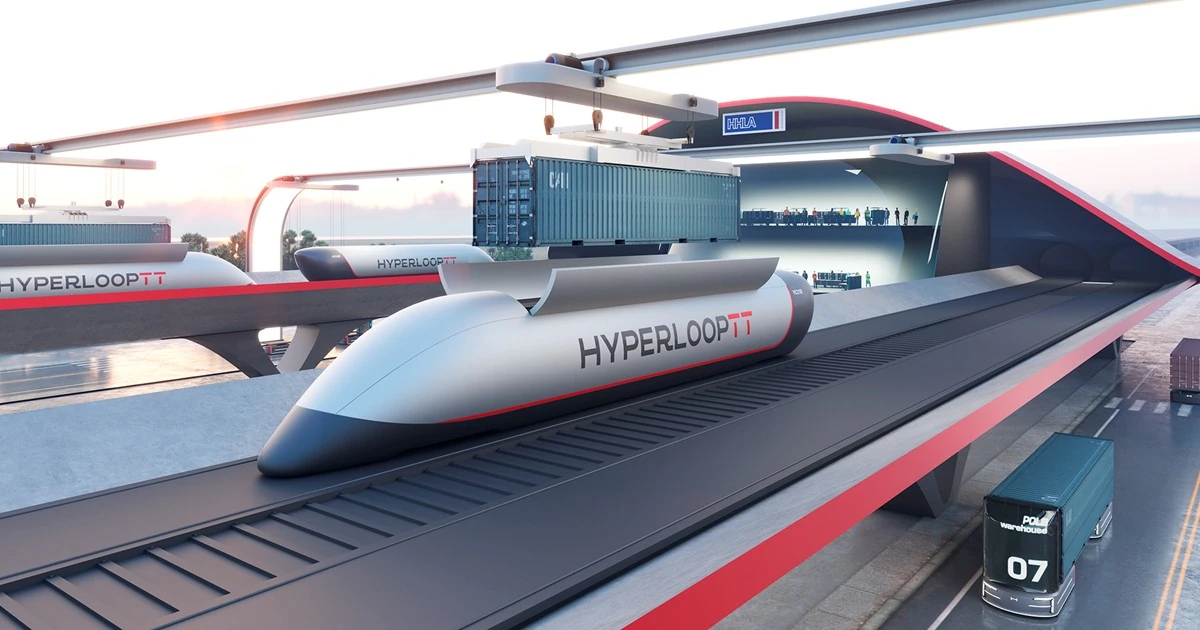
Instead of improving trains or airplanes, the goal was to build an entirely new system that removes the core limitations of both.
The Origin of the Idea
The concept of hyperloop gained global attention as a futuristic solution to long-distance travel. But turning that idea into reality required more than just imagination. It needed engineering precision, global collaboration, and a clear execution roadmap.
Hyperloop TT (Transportation Technologies) emerged as one of the key players working to bring this vision to life. The company focused on combining advanced research with real-world feasibility, rather than staying at the conceptual level.
The Core Vision
At its foundation, Hyperloop TT Technology is built around three key pillars that define its long-term strategy:
| Vision Pillar | What It Means | Impact on Transportation |
|---|---|---|
| Speed without compromise | Near-zero resistance travel | Faster than traditional systems |
| Sustainability by design | Energy-efficient and low-emission operations | Reduced environmental impact |
| Scalability for the future | Infrastructure built for growing demand | Long-term global adaptability |
This structured approach ensures that innovation is not isolated to speed alone, but extends across efficiency and sustainability.
Role of Vacuum Tubes Transportation in the Vision
The introduction of Vacuum Tubes Transportation is what makes this vision technically possible. By creating low-pressure environments inside sealed tubes, Hyperloop TT removes one of the biggest barriers to speed: air drag.
This allows the system to:
- Achieve extremely high speeds with lower energy input
- Maintain consistent performance regardless of weather conditions
- Operate in a controlled and safe environment
Rather than adapting to external conditions like traditional transport, this system creates its own optimized environment.
Collaboration-Driven Innovation
One of the defining aspects of Hyperloop TT’s approach is its collaborative model. Instead of operating in isolation, the company has worked with:
- Engineers and researchers across multiple countries
- Government bodies exploring future transport solutions
- Infrastructure and technology partners
This global collaboration helps accelerate development while ensuring the system can be adapted to different regions and use cases.
From Concept to Reality
Unlike many futuristic ideas that remain theoretical, Hyperloop TT Technology has focused on real-world implementation. This includes:
- Building full-scale prototypes
- Conducting feasibility studies across different geographies
- Partnering with governments for pilot projects
The shift from concept to execution is what sets it apart in the emerging landscape of next-generation mobility solutions.
Technology Deep Dive: How Hyperloop TT Technology Works
Now that we understand the vision, let’s break down what actually powers Hyperloop TT Technology. What makes it truly revolutionary is not a single invention, but a combination of multiple advanced systems working together seamlessly.
At a high level, the system moves passenger or cargo pods through a low-pressure tube using magnetic levitation and electric propulsion. The result is extremely fast, smooth, and energy-efficient travel.
Core Components of the System
To understand how Vacuum Tubes Transportation works in practice, it helps to look at its key building blocks:
| Component | Function | Why It Matters |
|---|---|---|
| Vacuum Tube | Maintains low-pressure environment | Reduces air resistance dramatically |
| Passenger/Cargo Pods | Enclosed vehicles for transport | Ensures safety and comfort |
| Magnetic Levitation | Lifts pods above the track | Eliminates friction |
| Linear Electric Motor | Propels pods forward | Enables high-speed acceleration |
Each component solves a specific limitation found in traditional transportation systems.
The Science Behind the Speed
The biggest barrier to speed in conventional transport is air resistance. As vehicles move faster, drag increases exponentially, requiring more energy.
Hyperloop TT Technology tackles this by significantly reducing air pressure inside the tube. This creates a near-vacuum environment where pods can travel with minimal resistance.
Key scientific advantages:
- Reduced drag allows higher speeds with less energy
- Magnetic levitation removes contact friction
- Controlled environment ensures consistent performance
Instead of fighting resistance, the system is designed to avoid it.
Step-by-Step: How a Hyperloop Journey Works
To simplify the concept, here’s how a typical journey would function:
- Pods are placed inside a sealed vacuum tube
- Air pressure inside the tube is reduced
- Magnetic levitation lifts the pod slightly above the track
- Linear motors accelerate the pod to high speeds
- The pod glides smoothly with minimal resistance
- Deceleration happens gradually as it approaches the destination
The entire process is designed to be efficient, quiet, and predictable.
Technology Development Snapshot
| Metric | Value | Insight |
|---|---|---|
| Patents filed | 60 | Strong IP and innovation base |
| Test track length | 320 m | Real-world testing capability |
| Vacuum pressure achieved | 0.1 mbar | Near-zero air resistance |
| Capsule length | 32 m | Full-scale passenger design |
| Capsule sensors | 72 | Advanced monitoring systems |
| Engineering hours | 21,000 hrs | Extensive R&D effort |
This data highlights that Hyperloop TT Technology is not just conceptual but backed by real engineering progress. From patented systems to full-scale capsule development, the company has invested heavily in validating Vacuum Tubes Transportation under real-world conditions.
A Shift in Engineering Thinking
What makes Hyperloop TT Technology unique is its systems-level innovation. It doesn’t rely on a single breakthrough but integrates multiple technologies into a cohesive solution.
- Physics is optimized, not resisted
- Infrastructure is purpose-built, not adapted
- Efficiency is designed into the system from the start
Passenger Experience & Safety Design
Human-Centric design & passenger experience include:
- Cabin design and seating comfort
- Smooth, vibration-free travel due to magnetic levitation
- Pressurized and controlled environment
- Emergency and safety systems
Implementation Strategy: Turning Vision into Reality
Building something as ambitious as Hyperloop TT Technology is not just about innovation. It requires a phased, strategic approach that balances experimentation, validation, and real-world deployment.
Unlike traditional infrastructure projects, this is a completely new category of Vacuum Tubes Transportation, which means every stage must be carefully tested before scaling.
Phased Development Approach
Hyperloop TT has followed a structured path to move from concept to implementation. Each phase focuses on reducing uncertainty and proving feasibility.
| Phase | Key Activities | Outcome |
|---|---|---|
| Concept & Research | Design models, simulations, feasibility studies | Validated technical foundation |
| Prototyping & Testing | Building test tracks and capsules | Real-world performance insights |
| Certification & Safety | Regulatory approvals and safety validations | Increased trust and compliance |
| Deployment Planning | Route selection and infrastructure partnerships | Market readiness |
This phased strategy helps minimize risks while building credibility with stakeholders.
Global Projects and Partnerships
A key strength of Hyperloop TT Technology lies in its global outlook. Instead of focusing on a single region, the company has explored opportunities across multiple countries.
Some key implementation efforts include:
- Feasibility studies in regions with high intercity travel demand
- Partnerships with governments for pilot projects
- Collaborations with infrastructure and engineering firms
This global approach ensures that the system can be adapted to different economic and geographic conditions.
Role of Public-Private Collaboration
Large-scale transportation systems require strong collaboration between public and private sectors. Hyperloop TT has actively worked with:
- Government authorities for policy and regulatory alignment
- Private investors for funding and scalability
- Engineering partners for construction and deployment
This collaborative model is critical for turning Vacuum Tubes Transportation into a commercially viable solution.
Infrastructure Challenges and Planning
Implementing Hyperloop TT Technology is not without challenges. Building entirely new infrastructure requires careful planning.
Key considerations include:
- Land acquisition and route optimization
- Integration with existing transport networks
- High initial capital investment
- Long approval timelines
Despite these challenges, the long-term benefits of speed, efficiency, and sustainability make the investment compelling.
Scaling for the Future
One of the biggest goals of Hyperloop TT is scalability. The system is designed to expand over time, connecting major cities and economic hubs.
- Modular infrastructure allows phased expansion
- Technology can be adapted for both passenger and cargo use
- Potential to integrate with smart city ecosystems
This makes Hyperloop TT Technology not just a project, but a long-term mobility solution.
Hyperloop TT Technology Business Model & Economics
While the technology behind Hyperloop is impressive, its long-term success depends on one critical question: can it be commercially viable? Building infrastructure for Hyperloop TT Technology requires significant investment, so the economics must justify the scale.
The approach combines multiple revenue streams with a long-term vision of efficiency and scalability.
Revenue Streams
Unlike traditional transport systems that rely heavily on ticket pricing, Hyperloop TT explores diversified income sources.
Key revenue channels include:
- Passenger travel with premium and standard pricing models
- High-speed cargo and logistics services
- Long-term infrastructure leasing and partnerships
- Advertising and ancillary services within stations
Cargo & Logistics Opportunity
- High-speed cargo transport as a major revenue driver
- Time-sensitive logistics (e.g., e-commerce, medical supply chains)
- B2B logistics partnerships
This multi-layered model helps distribute financial risk while maximizing returns.
HyperPort Cargo Economics Snapshot
| Metric | Value | Business Implication |
|---|---|---|
| Route length | 549 km | Ideal for intercity logistics |
| Top speed | 600 km/h | Faster than traditional freight |
| Throughput | 5,600 TEUs/day | High-volume cargo capacity |
| Single-line capacity | 2,800 TEUs/day | Scalable infrastructure |
| Port cargo benchmark | 57M tons/year | Strong real-world demand context |
These figures show that cargo is not a secondary use case but a core revenue driver for Hyperloop TT Technology. By enabling faster and high-volume logistics, Vacuum Tubes Transportation can significantly improve supply chain efficiency and unlock strong B2B revenue potential.
Cost Structure Overview
The biggest challenge for Vacuum Tubes Transportation lies in its upfront costs. However, operational efficiency over time is expected to offset these investments.
| Cost Component | Nature of Cost | Long-Term Impact |
|---|---|---|
| Infrastructure Build | Very High (Initial) | One-time capital investment |
| Technology Development | High | Drives innovation and efficiency |
| Maintenance | Moderate | Lower due to reduced wear and tear |
| Energy Consumption | Low-Moderate | More efficient than air travel |
The key idea is simple: high initial investment, but lower operational costs over time.
Long-Term ROI Potential
The economic viability of Hyperloop TT Technology improves significantly at scale. Once infrastructure is in place, the system can handle large volumes of passengers and cargo efficiently.
Some advantages include:
- Lower energy cost per passenger compared to airplanes
- Faster turnaround times increasing operational capacity
- Reduced maintenance due to minimal friction
This creates the potential for strong returns over the long term, especially on high-demand routes.
Pricing Strategy and Accessibility
For Hyperloop to succeed, pricing must strike a balance between affordability and profitability.
- Premium pricing for ultra-fast travel on high-demand routes
- Competitive pricing compared to business-class air travel
- Potential subsidies or government support in early stages
The goal is to position it as a high-value alternative, not just a luxury option.
A Shift Toward Infrastructure as a Service
One interesting aspect of Hyperloop TT Technology is its potential to function as an infrastructure platform rather than just a transport service.
- Governments and private players can co-invest
- Systems can be licensed or operated through partnerships
- Long-term contracts ensure stable revenue streams
This model aligns well with large-scale infrastructure projects and reduces financial risk.
Competitive Landscape: How Hyperloop TT Technology Stacks Up
To truly evaluate Hyperloop TT Technology, it’s important to first look at direct competitors within the hyperloop space, and then compare it with traditional transportation systems. The real competition is not just trains or airplanes, but other companies racing to commercialize Vacuum Tubes Transportation.
Hyperloop Industry: Key Players
The hyperloop space is still emerging, but a few companies have taken the lead in developing and testing the technology.
| Company | Focus Area | Current Status | Key Differentiator |
|---|---|---|---|
| Hyperloop TT | Passenger + Cargo systems | Global partnerships & prototypes | Collaboration-driven development |
| Virgin Hyperloop | Passenger transport | Conducted human trials | Strong branding & early testing |
| Hardt Hyperloop | European network development | Focus on EU infrastructure | Regional integration strategy |
| TransPod | Ultra-high-speed transport systems | Concept & feasibility stage | Focus on AI-driven systems |
This table shows that while multiple players are active, Hyperloop TT Technology stands out for its global collaboration model and dual focus on passenger and cargo transport.
Where Hyperloop TT Stands Out
Among hyperloop companies, Hyperloop TT Technology differentiates itself through:
- A strong emphasis on real-world partnerships with governments
- Focus on both passenger and freight use cases
- Long-term infrastructure planning rather than just testing
This positions it as a practical implementation-driven player, rather than purely experimental.
Traditional Transport Modes Comparison: Speed, Cost & Sustainability
The bubble chart compares transportation modes across three dimensions: speed, cost, and sustainability. The Cost Index is a relative measure (on a scale of 1–10) that reflects overall travel cost per passenger, including infrastructure and operational expenses. Bubble size represents sustainability, where larger bubbles indicate more energy-efficient and environmentally friendly systems. This visualization highlights how Hyperloop TT Technology aims to combine ultra-high speed with balanced costs and strong sustainability compared to traditional transport options.
Market Opportunity
The biggest opportunity lies in high-traffic corridors where current systems are inefficient.
- Routes with heavy air and rail congestion
- City pairs with strong economic activity
- Regions investing in future-ready infrastructure
This is where Hyperloop solutions can deliver the highest impact.
Results & Impact: What Hyperloop TT Technology Could Change
While Hyperloop TT Technology is still evolving, its projected impact is significant across performance, sustainability, and economic transformation. Unlike incremental upgrades in transport, this system has the potential to redefine how distance and time are perceived.
The real value lies not just in speed, but in how efficiently and sustainably that speed is achieved.
Performance Improvements
One of the most talked-about advantages of Vacuum Tubes Transportation is its ability to deliver extremely high speeds with consistency.
Key performance expectations include:
- Travel speeds comparable to or faster than commercial aircraft
- Minimal delays due to controlled operating environments
- Faster boarding and turnaround times
- Reduced travel time between major cities
This means journeys that currently take hours could potentially be reduced to minutes.
Environmental Benefits
Sustainability is built into the foundation of Hyperloop TT Technology, making it a strong alternative to carbon-intensive transport systems.
Major environmental advantages:
- Lower carbon emissions compared to air and road transport
- Energy-efficient operations due to reduced friction and drag
- Potential integration with renewable energy sources
- Reduced noise pollution in urban areas
This aligns well with global goals for greener infrastructure and climate-conscious development.
Impact Across Key Areas
To better understand its potential, here’s how Hyperloop could influence different sectors:
| Impact Area | Traditional Systems | With Hyperloop TT Technology |
|---|---|---|
| Travel Time | Hours between cities | Minutes in many cases |
| Energy Efficiency | Moderate to low | High |
| Emissions | High (especially aviation) | Significantly lower |
| Reliability | Affected by weather and congestion | Highly predictable |
This comparison highlights how Vacuum Tubes Transportation could outperform existing systems across multiple dimensions.
Economic and Social Impact
Beyond technical performance, the broader impact of Hyperloop could be transformative.
- Stronger economic links between cities
- Expansion of job opportunities across regions
- Reduced pressure on urban housing by enabling long-distance commuting
- Boost in trade and logistics efficiency
Faster connectivity often leads to faster economic growth, and Hyperloop could accelerate this effect.
Industry-Level Transformation
If successfully implemented at scale, Hyperloop TT Technology could reshape the transportation industry itself.
- Shift in preference from short-haul flights to ground-based high-speed travel
- Increased competition driving innovation in existing systems
- Emergence of new infrastructure and mobility ecosystems
It’s not just a new mode of transport, but a catalyst for industry-wide change.
Challenges & Risks: What Could Slow Down Hyperloop TT Technology?
Despite its potential, Hyperloop TT Technology faces key challenges that could slow adoption. Since Vacuum Tubes Transportation is a completely new system, both infrastructure and regulations need to be built from the ground up.
High Initial Investment
The biggest barrier is cost.
- Building vacuum tube infrastructure across long distances
- Land acquisition and construction complexity
- High upfront capital with long payback periods
Regulatory Hurdles
Lack of established frameworks creates delays.
- Challenge Area Key Issue Impact
- Safety Standards No predefined regulations Slower approvals
- Policies New laws required Project delays
Safety & Public Trust
Adoption depends heavily on trust.
- Safety in high-speed, sealed environments
- Emergency handling systems
- Passenger acceptance of new technology
Infrastructure Complexity
Execution is technically demanding.
- Maintaining low-pressure tubes
- Structural and engineering challenges
- Integration with existing systems
Adoption Uncertainty
Early-stage demand is not guaranteed.
- Hesitation from passengers and governments
- Competition from existing transport systems
Future Outlook: What Lies Ahead for Hyperloop TT Technology
The future of Hyperloop TT Technology looks promising, but its success will depend on execution, partnerships, and regulatory support. As interest in faster and sustainable travel grows, Vacuum Tubes Transportation is gaining attention as a long-term solution.
What to Expect Next
- Pilot projects and test tracks moving toward commercialization
- Stronger government and private sector collaborations
- Advancements in safety, cost optimization, and scalability
Long-Term Potential
If implemented successfully, Hyperloop could:
- Connect major cities within minutes
- Reduce reliance on short-haul flights
- Become a core part of smart city infrastructure
In the long run, Hyperloop TT Technology has the potential to redefine global mobility by combining speed, efficiency, and sustainability.
Key Takeaways: What This Case Study Really Tells Us
Hyperloop TT Technology is not just about speed. It represents a shift in how transportation systems are designed from the ground up, with efficiency and sustainability at the core.
Key Insights
- A paradigm shift, not an upgrade: Unlike trains or airplanes, Hyperloop redefines mobility using Vacuum Tubes Transportation
- Speed + efficiency combined: It aims to deliver aircraft-level speed with lower energy consumption
- Strong long-term potential: Especially for high-demand intercity routes
- Biggest barrier is execution: High costs, regulations, and infrastructure complexity remain key challenges
- Best positioned as a complementary system: Not a replacement, but an addition to existing transport networks
Final Thought
If successfully implemented, Hyperloop TT Technology could transform how we think about distance, time, and connectivity. The idea is powerful, but its real impact will depend on how effectively it moves from vision to large-scale reality.