Introduction – Starbucks Mobile Ordering and Loyalty Programs
Starbucks became an influential example of retail digital transformation by integrating mobile ordering, digital payments and Starbucks Rewards into a connected customer experience. Its mobile platform allows customers to browse menus, customise products, pay digitally and place orders ahead for collection at participating stores.
However, Starbucks’ latest transformation is no longer focused solely on increasing digital adoption. Under its “Back to Starbucks” strategy, the company is working to balance mobile convenience with faster service, stronger partner-customer interaction and a renewed coffeehouse environment. Technology remains central, but its role is increasingly to improve order flow, support employees and strengthen the overall customer experience rather than replace the human element of the brand.
This case study examines how Starbucks Mobile Ordering and Starbucks Rewards created a scalable digital ecosystem, the operational challenges associated with that growth, and the strategic changes being implemented to support sustainable long-term performance.
About Starbucks: A Global Coffeehouse Innovator
Founded in Seattle in 1971, Starbucks has grown from a specialist coffee retailer into one of the world’s largest coffeehouse businesses. As of 28 September 2025, Starbucks operated 40,990 stores across 89 markets. Its network consisted of 21,514 company-operated stores and 19,476 licensed stores, creating a nearly balanced global operating model.
Starbucks generated $37.18 billion in net revenue during fiscal 2025, compared with $36.18 billion in fiscal 2024. Company-operated stores accounted for approximately 83% of total net revenue, while licensed stores, consumer packaged products and other channels extended the brand beyond traditional coffeehouses.
The company employed approximately 381,000 people worldwide at fiscal year-end 2025, including around 223,000 employees in the United States. Brian Niccol served as chairman and chief executive officer.
Starbucks’ Digital Transformation Milestones:
| Initiative | Period | Strategic significance |
|---|---|---|
| Starbucks Rewards | 2008 | Connected customer purchases with loyalty incentives |
| Starbucks mobile app | 2011 | Combined payments, account access and digital engagement |
| Mobile Order & Pay | 2015 | Enabled advance ordering and collection at participating stores |
| Back to Starbucks strategy | 2024 | Refocused the business on service, coffeehouse experience and brand strength |
| Green Apron Service Model | FY2025 | Introduced more consistent service routines supported by technology and improved order flow |
| Reimagined Starbucks Rewards | Forward-looking | Identified in the 2026 proxy as part of future strategic performance priorities |
Green Apron Service Model uses new routines and tools, supported by technology, to improve order flow and speed of service while giving partners more time to focus on craft and customer connection.
Recent report references a reimagined Starbucks Rewards program among the company’s strategic priorities. The proxy file was too large for complete extraction through the available browser, so this point should be described carefully and not accompanied by unverified membership projections.
Mobile Ordering: Revolutionizing Customer Convenience
Starbucks Mobile Order & Pay allows customers to place orders in advance through the Starbucks app for pickup at participating locations in several markets. Customers can browse available products, customise beverages and food items, select a participating store, complete payment and monitor the order before collection.
Mobile ordering created a more convenient purchasing journey, particularly for customers seeking predictable and efficient service. It also gave Starbucks a direct digital connection through which the company could combine ordering, payments, loyalty participation and personalised communication.
At the same time, high levels of order customisation and simultaneous demand across café, drive-thru, delivery and mobile channels can create operational complexity. Starbucks’ current strategy therefore emphasises staffing, order sequencing, service routines and technology that improves the flow of orders through the coffeehouse.
Impact of Mobile Ordering
| Operational area | Verified or supportable effect |
|---|---|
| Advance ordering | Allows customers to place orders before arriving |
| Product customisation | Captures detailed beverage and food preferences digitally |
| Digital payment | Integrates ordering and payment within the app |
| Order flow | Technology supports improved sequencing and service routines |
| Customer data | Creates first-party behavioural and transaction information |
| Scalability | Can be deployed across participating locations and markets |
Loyalty Programs: Rewards Building Long-Term Engagement
Starbucks Rewards: A Spend-Based Loyalty Ecosystem
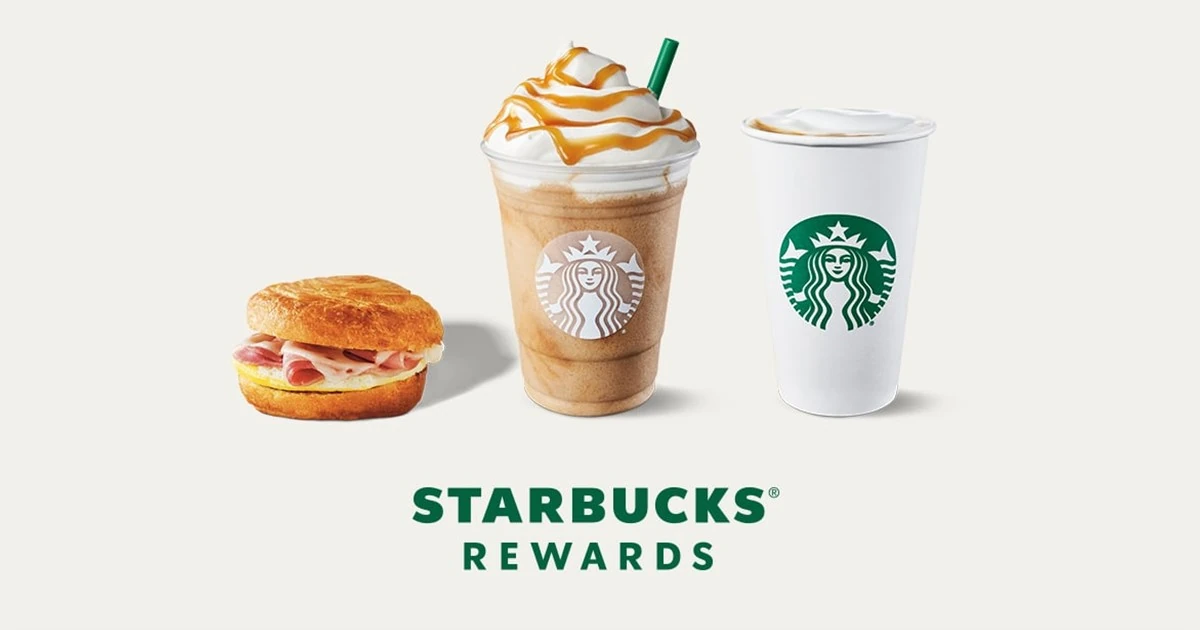
Starbucks Rewards is primarily a spend-based loyalty program. Registered members can earn Stars through eligible purchases and redeem accumulated Stars for qualifying products at participating stores.
The program connects loyalty activity with digital payment, mobile ordering and customer accounts. This allows Starbucks to build a continuing relationship that extends beyond an individual transaction.
According to the 2026 proxy statement, Starbucks had 34.2 million 90-day active Rewards members in the United States, representing a 1% year-over-year increase.
The 90-day definition is important. It indicates members who interacted with the program during a recent period rather than every person who has ever registered.
Impact of the Rewards Program
| Rewards capability | Business relevance |
|---|---|
| Stars earned on eligible purchases | Encourages continued participation |
| Multiple payment methods | Reduces friction for members |
| Reward redemption | Provides a tangible customer benefit |
| Mobile integration | Connects ordering, payment and loyalty |
| First-party data | Supports customer understanding and communication |
| Deferred-revenue mechanism | Links loyalty activity to recognised financial obligations |
Key Business Benefits:
- Increased Customer Retention: Loyalty members are more likely to make repeat purchases.
- Data-Driven Insights: Purchase patterns guide personalized offers and promotions.
- Stronger Emotional Connection: Customers feel valued and appreciated.
- Higher Engagement Rates: Regular notifications keep users active and engaged.
The Starbucks Rewards Program demonstrates how well-designed loyalty initiatives can build long-term customer relationships while driving measurable revenue growth.
Integration of Mobile Ordering and Loyalty Programs
How Mobile Ordering and Starbucks Rewards Work Together
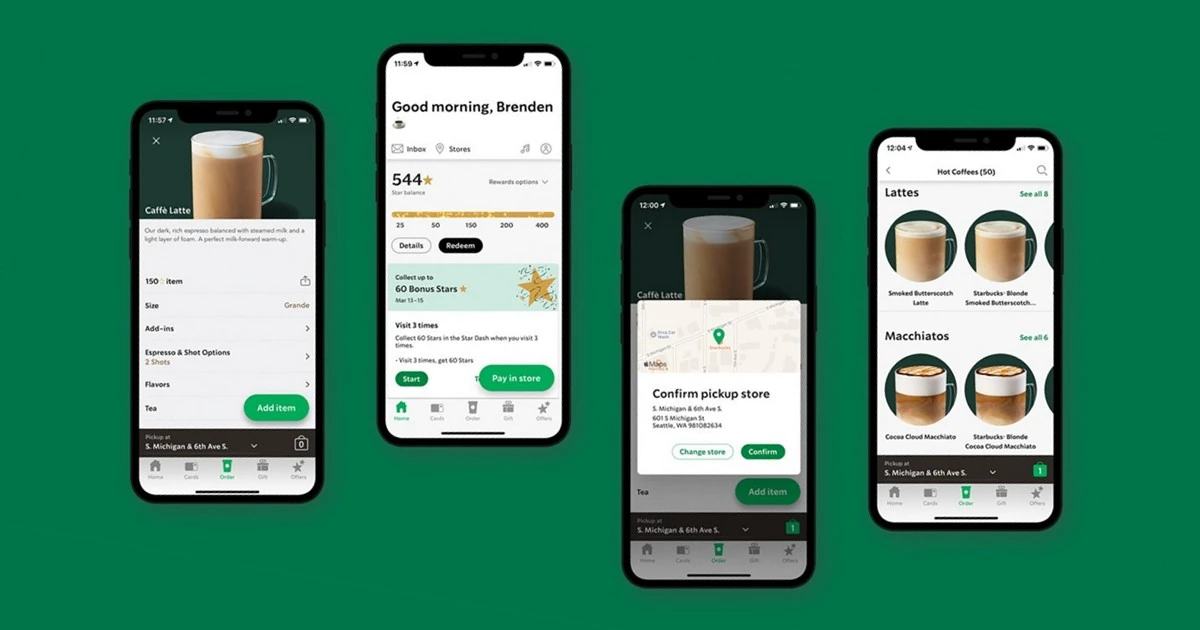
The strategic strength of Starbucks’ digital ecosystem comes from the integration of ordering, payment and loyalty within a single customer journey. A Rewards member can sign in, select a store, customise an order, complete payment, earn eligible Stars and later redeem rewards through the same digital relationship.
This integration reduces the number of separate steps required to transact with the brand and creates a consistent customer identity across digital touchpoints. For Starbucks, it provides a foundation for understanding purchase patterns, improving communication and designing more relevant customer experiences.
The latest filings, however, do not establish that this integration produced specific improvements such as 30% growth in repeat purchases or a 45% increase in app engagement. Those figures should be removed. The stronger and more accurate conclusion is that the integrated platform supports convenience, loyalty participation, customer data collection and operational coordination.
Strategic Benefits
- A unified ordering, payment and loyalty experience
- Lower transaction friction for enrolled customers
- Better visibility into customer behaviour and preferences
- A direct channel for offers, product discovery and communication
- A scalable digital relationship that extends beyond the physical store
This integration highlights Starbucks’ ability to merge digital technology and customer loyalty into a unified, customer-centric strategy.
When Digital Success Creates Physical Complexity
Mobile ordering can improve customer convenience while simultaneously increasing pressure on store operations. Orders may arrive from café customers, mobile users, drive-thru lanes and delivery platforms during the same service period. Highly customised beverages can further increase production complexity.
Starbucks’ fiscal 2025 strategy reflects this challenge. The company invested in additional staffing and labour hours, introduced the Green Apron Service Model and deployed tools intended to improve order flow and speed of service. These changes suggest that the next stage of Starbucks’ digital transformation depends not only on app functionality but also on synchronising digital demand with store capacity.
This offers an important strategic lesson: a successful digital channel must be supported by processes, labour planning, production capacity and service design in the physical operation.
Competitive Landscape: Staying Ahead in a Digital Market
Industry Comparison:
| Brand | Digital ordering | Loyalty platform | Primary strategic strength |
|---|---|---|---|
| Starbucks | Mobile Order & Pay | Starbucks Rewards | Deep integration of ordering, payments and loyalty |
| Dunkin’ | Mobile ordering | Dunkin’ Rewards | Convenience and frequency-oriented engagement |
| McDonald’s | Mobile ordering | MyMcDonald’s Rewards | Scale, value offers and drive-thru integration |
| Tim Hortons | Mobile ordering | Tims Rewards | Strong presence in core Canadian markets |
Starbucks’ Competitive Edge:
Starbucks’ advantage is not simply that it offers mobile ordering or rewards; competitors provide similar features. Its differentiation comes from the depth of integration between mobile payments, customisation, stored value, rewards and a globally recognised coffeehouse brand.
However, digital capability alone does not guarantee superior performance. Competitors with high-throughput drive-thru systems, simplified menus or strong value positioning may perform better in specific customer missions. Starbucks’ challenge is therefore to preserve its digital convenience while maintaining beverage craft, service quality and the coffeehouse experience.
Results and Business Impact
Key Starbucks Financial Metrics
Starbucks generated $37.18 billion in consolidated net revenue during fiscal 2025, an increase of approximately 3% from $36.18 billion in fiscal 2024. North America generated $27.37 billion, International generated $7.82 billion and Channel Development generated $1.87 billion.
The results also show that revenue growth did not translate into uniformly stronger operating performance. North America comparable store sales declined 2%, as comparable transactions decreased 4% and average ticket increased 2%. Starbucks also incurred higher labour, marketing and restructuring costs as it invested in its “Back to Starbucks” transformation.
Starbucks Global Store Count by Country (2025)
As of October 2023, Starbucks operates a total of 38,038 stores across various countries, with the United States and China being the largest markets, hosting 16,346 and 6,804 stores respectively. The company’s strategic mix of company-operated and licensed stores allows for both direct control in key markets and collaborative partnerships in others, facilitating global expansion and local market adaptation.
Starbucks Revenue Mix by Product Category (FY2025): Beverages Continue to Drive Growth
Beverages remained the foundation of Starbucks’ business in fiscal 2025, contributing $22.54 billion, or approximately 61% of total revenue. Food products generated $7.05 billion (19%), while Other revenue—including packaged coffee and tea, royalties, licensing income, beverage-related ingredients, and merchandise—contributed $7.59 billion (20%). This revenue mix highlights Starbucks’ continued dependence on its premium beverage portfolio while demonstrating the growing importance of complementary food offerings and diversified revenue streams in supporting long-term business growth and profitability.
Customer Testimonials:
“The Starbucks app makes ordering so easy. I love collecting Stars and redeeming free drinks!”
“The loyalty rewards keep me coming back every week.”
Future Outlook
- Reimagining Starbucks Rewards: The 2026 proxy statement identifies a reimagined Starbucks Rewards program as part of the company’s strategic priorities. The opportunity is to make loyalty more engaging while supporting profitable customer behaviour rather than relying excessively on broad promotions.
- Improving Order Flow and Service Speed: Starbucks is investing in operating routines, labour deployment and technology intended to improve order flow and speed of service. The Green Apron Service Model is designed to create more consistent execution while allowing partners to focus on craft and customer connection.
- Balancing Mobile Convenience with the Coffeehouse Experience: The “Back to Starbucks” strategy places renewed emphasis on the coffeehouse as a welcoming community space. Future digital initiatives will therefore need to support rather than overwhelm the physical customer experience.
- Building Sustainable Growth Beyond App Adoption: The next stage of Starbucks’ transformation will be measured not only through digital participation, but also through transaction growth, service quality, operational productivity and store-level financial performance.
Conclusion and Key Takeaways
Starbucks demonstrates that successful mobile ordering requires more than a high-performing app. Its digital ecosystem connects ordering, payments and loyalty at global scale, but the company’s recent experience also shows that digital demand must be matched with store capacity, labour planning and consistent service execution.
In fiscal 2025, Starbucks reached $37.18 billion in revenue and operated 40,990 stores across 89 markets. At the same time, declining comparable transactions and higher operating investment highlighted the need for a strategic reset.
The central lesson is that digital convenience and human experience are not competing strategies. When technology improves order flow, supports employees and strengthens customer relationships, it becomes an operational capability rather than simply another sales channel.