Introduction
Over the last decade, the rise of e-commerce has reshaped how businesses start, scale, and sell. But despite this shift, many entrepreneurs still face a tough question: how do you build an online store without the technical headaches?
Enter Shopify.
What started as a small Canadian startup in 2006 has grown into a global e-commerce platform that powers millions of businesses in over 175 countries. From side hustles to massive retail brands, Shopify gives users a powerful yet approachable way to build, manage, and grow an online store without needing to write a single line of code.
This case study explores how Shopify removed barriers, empowered entrepreneurs, and redefined what it means to run a modern online business.
Problems Entrepreneurs Faced Before Shopify
In the early days of e-commerce, launching an online store was anything but easy. Entrepreneurs faced a messy mix of DIY website builders, payment integrations, and shipping tools, all requiring time, money, and technical know-how.
The result? Many gave up before making their first sale.
What the market lacked was a simple, scalable, all-in-one online store builder, a platform that worked for beginners and could grow with them.
This was the gap Shopify set out to fill: a way for anyone, anywhere, to launch a beautiful, functional, and fully integrated e-commerce platform without starting from scratch.
The Solution – Shopify’s Online Store Builder
Shopify’s rise isn’t just about good branding, it’s about solving a real, persistent problem for millions of merchants: how to launch and run a professional-grade online store without technical headaches.
At its core, Shopify is an online store builder designed for simplicity and scale. Whether you’re a first-time entrepreneur or an experienced seller switching platforms, Shopify strips away the friction. With no coding required, users can launch a fully functional store in hours, not weeks.
What Makes It Work?
Drag-and-Drop Design: Shopify’s theme editor makes it easy to create a beautiful storefront, no design skills needed. Choose from hundreds of templates, then customize everything from fonts to layouts.
- Integrated Payments and Shipping: From credit card processing to label printing, Shopify handles the logistics. Users can accept payments from over 100 providers and ship with real-time rates, all built into the platform.
- App Ecosystem for Everything: With over 8,000 apps in the Shopify App Store, sellers can add powerful features with a click, email marketing, loyalty programs, inventory automation, and more.
- Mobile Optimization: Every Shopify store is responsive by default, making mobile shopping seamless, a must in today’s e-commerce world.
- SEO and Marketing Tools: Built-in SEO features, customizable meta tags, and blogging tools help sellers get discovered through organic search. That’s a major win for anyone trying to compete in a crowded market.
Most importantly, Shopify doesn’t just stop at building the store, it supports sellers at every stage of growth. From starter plans for hobbyists to robust enterprise solutions (Shopify Plus), it scales as businesses scale. That’s what sets it apart from other e-commerce platforms: it’s just as accessible to a local candle maker as it is to a global apparel brand.
By offering a complete, easy-to-use online store builder that’s backed by a full suite of e-commerce tools, Shopify has removed the barriers and unlocked new possibilities for online selling.
Easy Implementation – Shopify’s Streamlined Setup
One of Shopify’s biggest advantages is how fast merchants can go from idea to live store. There’s no complex setup or developer dependency, just pick a theme, customize it, and start selling.
The platform also includes built-in essentials like:
- Payments (via Shopify Payments)
- Shipping integrations
- Inventory and order management
- SEO and mobile optimization
Even non-technical users can launch with confidence, while developers can extend functionality through Shopify’s APIs and Liquid templating language.
From solo creators to scaling brands, Shopify turns setup into a smooth, streamlined experience helping merchants launch faster and focus on growth.
Built for Growth – What Makes Shopify Tick
At its core, Shopify succeeds because it understands one thing better than most: merchants don’t want to manage technology, they want to grow their business. From the smallest creator-led brand to multi-million dollar enterprises, Shopify removes friction and adds leverage in all the right places.
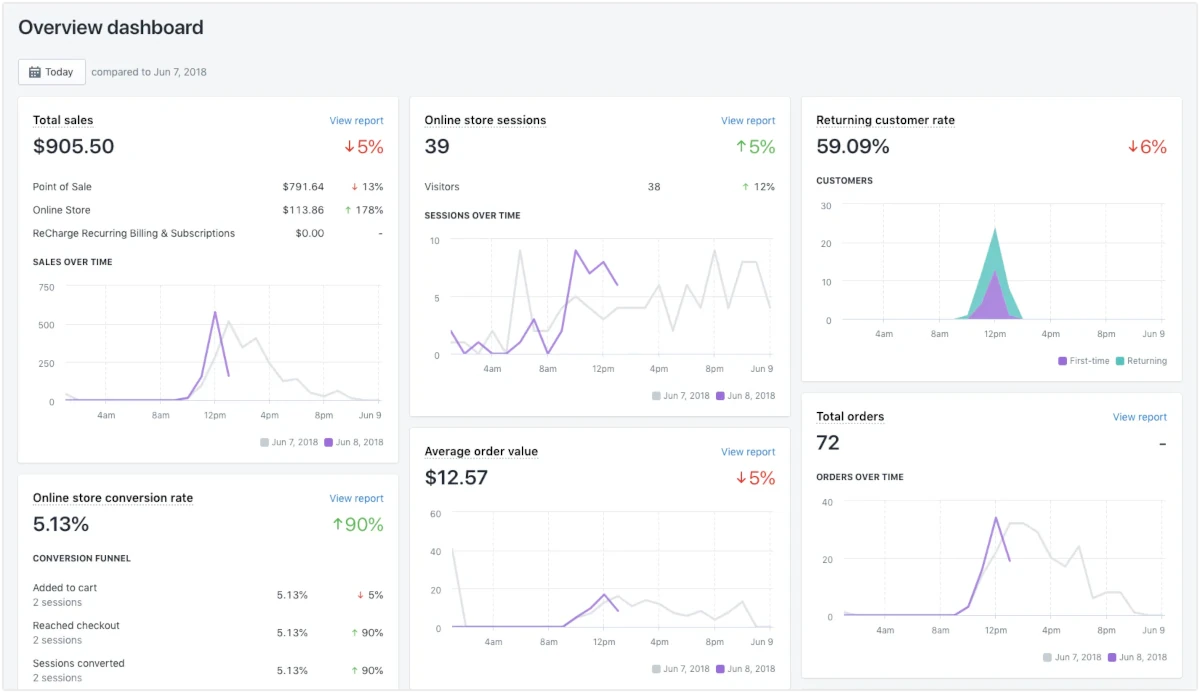
Shopify’s centralized dashboard brings everything together in one clean interface. From product uploads to order tracking and customer insights, merchants manage it all from a single place, no switching tabs or tools.
Simplicity Meets Scale
Shopify’s biggest strength lies in its dual appeal. New users can launch a professional storefront in hours using drag-and-drop tools, while developers and larger teams can go deep with APIs, Liquid templates, and custom apps. It’s this flexibility that allows users to start small and scale big, without switching platforms.
Full-Stack Control
Unlike marketplaces like Amazon or Etsy, Shopify gives merchants full ownership:
- Branding and design are entirely customizable
- Customer data belongs to the merchant
- Checkout and fulfillment are built-in, but still extendable
This full-stack approach makes Shopify the platform of choice for brands that value independence and long-term equity.
Ecosystem Depth
The Shopify App Store is a powerful differentiator. With 8,000+ apps and themes, merchants can:
- Automate tasks
- Expand into new markets
- Add subscriptions, upsells, email marketing, and more
Plus, the partner and developer ecosystem ensures there’s always help available from templates to agencies to technical consultants.
Multichannel by Default
Modern commerce doesn’t happen in one place. Shopify lets merchants sell on:
- Online stores
- Social media (Instagram, TikTok, Facebook)
- Marketplaces (Amazon, eBay)
- Physical stores (via Shopify POS)
This built-in multichannel approach gives sellers more exposure without extra tech headaches.
Constant Innovation
From launching its AI-powered assistant Shopify Magic, to integrations with Google and Meta, Shopify keeps improving without overhauling. The platform evolves quickly, but always with the merchant in mind.
Shopify works because it’s more than software, it’s a growth partner. A true online store builder that makes success simpler, faster, and more scalable at every stage of the journey.
The Impact – Growth, Revenue, and Real-World Wins
Shopify’s 2024 performance firmly established its dominance as a global e-commerce platform and the most scalable online store builder on the market. With merchants increasingly turning to digital solutions for growth, Shopify delivered outstanding results across all core metrics.
2024 Financial Highlights
- Total Revenue reached $8.8 billion, up from $7 billion in 2023, reflecting a strong 25% year-over-year growth.
- Gross Merchandise Volume (GMV) hit a record $260.1 billion, growing nearly 10% from the prior year.
- Gross Profit surged to $4.4 billion, showing improved operating leverage and margin expansion.
- Subscription Solutions revenue climbed to $2.35 billion, while Merchant Solutions surged to $6.53 billion demonstrating strong adoption of Shopify Payments, POS, and shipping services.
Revenue Breakdown Visualization
A stacked bar chart comparing revenue from Subscription Solutions and Merchant Solutions over the last decade clearly illustrates this upward trend. Shopify’s ability to monetize both software and transaction layers positions it uniquely among e-commerce platforms, balancing predictable recurring income with scalable growth upside.
Strategic Momentum
Shopify’s strength lies not just in numbers but in execution. In 2024, the company deepened its AI investments, expanded its partner ecosystem, and simplified global selling. Its leaner structure following the 2023 sale of its logistics business helped sharpen focus on core competencies: empowering merchants to start, grow, and scale with unmatched flexibility.
Shopify is more than a place to build an online store, it’s become the digital commerce engine behind millions of brands worldwide. The consistent year-over-year growth in both merchant adoption and transaction value reaffirms its role as the backbone of modern digital retail.
Competitive Landscape – Where Shopify Stands
The landscape for e-commerce platforms and online store builders is more competitive than ever. As digital entrepreneurship booms and brands seek more direct connections with their customers, a wave of platforms has emerged, each claiming to be the best. But few offer the breadth, scalability, and ecosystem that Shopify brings to the table.
Key Competitors at a Glance
Here’s how Shopify stacks up against its main rivals:
| Platform | Strengths | Limitations |
|---|---|---|
| Wix | User-friendly drag-and-drop builder | Limited scalability for large stores |
| Squarespace | Beautiful templates, all-in-one design tools | Weak on e-commerce features and integrations |
| BigCommerce | Robust for mid-to-large businesses | Smaller app ecosystem, less intuitive UI |
| WooCommerce | Highly customizable, open-source | Requires plugins and technical know-how to scale |
| Amazon | Huge reach and built-in customer base | Marketplace model limits branding and control |
| Etsy | Great for handmade or niche products | High competition, fees, and limited customization |
While each has its niche, Shopify leads with a clear advantage in combining ease of use with enterprise-grade capability.
Why Shopify Stands Out
- All-in-One Commerce Suite: Shopify handles everything, from storefront setup and payments to fulfillment and POS, in a single streamlined platform.
- App Store Depth: With over 8,000 apps, Shopify offers unmatched flexibility without overwhelming new users.
- Omnichannel Power: Merchants can sell via social media, marketplaces, and brick-and-mortar, all managed from one unified backend.
- Developer & Enterprise Ready: For growing brands, Shopify Plus delivers the customization and performance needed to scale globally.
Market Share Leadership
Shopify now powers over 10% of total U.S. e-commerce, making it more than just another online store builder, it’s a central engine behind how the internet shops. Unlike marketplaces that commoditize sellers, Shopify equips merchants to own their brand, data, and customer relationships.
Turning Challenges into Milestones
No great platform gets to the top without facing serious challenges, and Shopify is no exception. From global disruptions to platform pivots, the company’s resilience is part of what makes it a standout e-commerce platform and trusted online store builder.
Navigating Post-Pandemic Normalization
Challenge: After the explosive pandemic-fueled growth of 2020–2021, many expected e-commerce to plateau. Shopify had to prove it wasn’t a one-hit wonder.
How Shopify Responded:
- Doubled down on international growth and cross-border commerce
- Introduced AI tools to enhance merchant productivity
- Refined focus by selling off its logistics unit to streamline operations
Managing Operational Scale
Challenge: Supporting millions of merchants at different business stages from startups to enterprise clients puts a huge strain on infrastructure and support systems.
How Shopify Responded:
- Invested in platform performance and backend scalability
- Expanded Shopify Plus for high-volume brands
- Offered tiered support, partner solutions, and improved onboarding
Competing with Marketplaces and Tech Giants
Challenge: Giants like Amazon and Walmart offer convenience and audience reach that’s hard to beat.
How Shopify Responded:
- Focused on merchant ownership: brand, data, and customer relationships
- Built direct integrations with major social and sales channels (Instagram, TikTok, Amazon)
- Reinforced its position as the brand-friendly alternative to marketplaces
Retaining Merchant Trust During Product Changes
Challenge: Big moves like sunsetting older features or shifting focus can frustrate long-time users.
How Shopify Responded:
- Maintained transparent communication through changelogs and community
- Improved documentation, support, and migration paths for feature updates
- Built a robust app ecosystem to replace and enhance core functions
Overcoming these challenges wasn’t just about survival, it reinforced Shopify’s mission to empower merchants, stay agile, and remain the most merchant-centric online store builder in the market.
The Takeaway: Why Shopify Leads the Future of Online Retail
Shopify’s rise from startup to global e-commerce platform is a blueprint in platform excellence. By staying merchant-focused and innovation-driven, it has redefined what a modern online store builder should be.
What makes Shopify stand out is its agility. In the face of change and competition, it doubles down on helping merchants launch, grow, and scale on their own terms.
Today, whether it’s a small brand or a global retailer, Shopify remains a trusted engine powering the future of digital commerce.
Key Takeaways
- Shopify balances ease of use with enterprise-grade power, making it accessible yet scalable.
- Its dual revenue engine, Subscription and Merchant Solutions, drives both stability and growth.
- The platform thrives in a competitive landscape by offering merchant ownership, not marketplace dependency.
- Shopify’s full-stack ecosystem (apps, AI, POS, payments) minimizes tech hurdles and maximizes merchant focus.
- Strategic shifts like focusing on core software and shedding logistics have sharpened its value proposition.